
Reviewed · ZURICH TOURS
Zurich in the Mirror of the Past: Self-Guided Audio Tour
Zurich’s past comes alive through the people connected to its streets, churches, monuments, and guild houses. This self-guided walk takes you from Bahnhofplatz through the old town and along the city’s best-known sights, while adding stories about reformers, rulers, artists, workers, and political figures.
I like the flexible 365-day access, since you can fit the walk around weather, trains, museum visits, or a late arrival. I also like the route’s broad scope: it covers the major churches and shopping streets, but also points out Lenin’s House, the Roman Baths, Cabaret Voltaire, guild buildings, and public sculptures.
The main drawback is that this is not a polished navigation app with a live host. You need your own phone, mobile internet, and headphones, and the quality of your experience may depend on how clear the supplied directions and photos feel on the day.
Key points at a glance

- Two to two and a half hours on foot: A compact introduction to Zurich’s central sights and stories.
- Start at Bahnhofplatz: The route begins beside Zurich’s main railway station, a handy point for arriving by train.
- English narration by a professional speaker: The audio guide explains the route and the city’s past without a live guide.
- Major sights plus unusual stops: Expect Grossmünster, Fraumünster, Lindenhof, Lenin’s House, the Roman Baths, Cabaret Voltaire, and more.
- 365 days of validity: You can choose your own starting time within the available schedule.
- Bring working technology: You need a charged smartphone, internet access, and headphones.
A city walk built around people and power
This is more than a checklist of Zurich’s famous buildings. The route uses the city center as a stage for stories about people who made difficult choices, fought for power, helped children, prevented violence, or sent others to their deaths.
That approach gives the walk a human edge. You will hear about good intentions, political intrigue, courage, cruelty, hard work, and lives that ended in tragedy. The information is intended to move beyond the usual postcard version of Zurich, where the city is reduced to banks, chocolate, and neat medieval lanes.
The tone should suit you if you like context with your sightseeing. You can pause beside a monument and think about the person it honors, then walk a few minutes farther to a building linked with a guild, a political figure, or an artistic movement.
The narration is in English and uses a professional speaker. One useful point from the available feedback is that the English is easy to understand, so you do not need advanced listening skills to follow along.
More Self-Guided Trails in Zurich
- Zurich: City Bus Tour with Audio Guide and Lake Cruise
★ 4.3 · 1,195 reviews - Zurich City Tour with Audio Commentary
★ 4.0 · 372 reviews - Zurich: City Top Attractions Tour by Bus with Audio Guide
★ 4.3 · 282 reviews
Bahnhofplatz gives you an easy starting point
The walk begins at Bahnhofplatz, directly in the area of Zurich’s main station. This is practical for a first morning in the city, since you can begin after arriving by train without arranging transport to a separate meeting point.
Remember, though, that Bahnhofplatz is only the starting location. No guide will be waiting there, and there is no group check-in. After booking, you receive a link and use your phone to follow the route.
That difference matters. A live tour gives you a person to ask when you miss a turn. Here, you are responsible for opening the link, checking the directions, and starting the audio. Before setting off, charge your phone and make sure your internet connection works.
The route includes photos and detailed directions, which should help you match the information on your screen with the buildings around you. Still, one person found the photos and description in need of improvement and wished for closer integration with Google Maps. I would treat the navigation as useful support, not as a replacement for basic map awareness.
Bahnhofstrasse and Paradeplatz show modern Zurich
From the station area, the route brings you toward Bahnhofstrasse, Zurich’s famous central shopping street. This part of the walk helps you see how the city connects its old center with its modern commercial life.
Paradeplatz adds another important piece. It is one of the city’s best-known public spaces and is closely associated with Zurich’s financial identity. The contrast is useful: within a short walk, you move between medieval churches, old guild houses, grand civic buildings, and the polished center of present-day commerce.
You do not need to be interested in banking to appreciate this section. It gives you a sense of how Zurich’s public image developed and why certain streets carry so much weight in the city’s daily life.
The audio format works well here because you can keep walking while listening. You are not tied to a group’s pace, and you can pause if you want a closer look at a building or sculpture.
Lindenhof offers a pause above the old town
Lindenhof is one of the key stops. It is a natural place to slow down and take in the old city from a different angle.
The route uses Lindenhof not simply as a viewpoint, but as part of the larger story of Zurich. The surrounding streets connect the city’s Roman past, medieval power structures, religious conflicts, and later civic life.
This is one of the places where the self-guided format gives you control. You can stop the audio, look around, and then continue when you are ready. A guide-led group may need to move on, but you can give Lindenhof five minutes or fifteen.
The practical catch is that the experience depends on your ability to hear the narration in an open public space. Headphones are strongly recommended, and you may want to pause rather than try to listen while crossing busy streets or dealing with city noise.
A few more Zurich day trips to weigh up
- The Dark Side of Zurich: Self-Guided Audio City Tour
★ 4.4 · 52 reviews - Zurich: Audio Guided City Tour and Train to “Top of Zurich”
★ 4.2 · 41 reviews - Einstein in Zurich: Walk in Time Exploration Game and Tour
★ 4.0 · 25 reviews - Self-Guided Audio City Tour in Zurich
★ 4.0 · 15 reviews
Grossmünster, Fraumünster, and Water Church

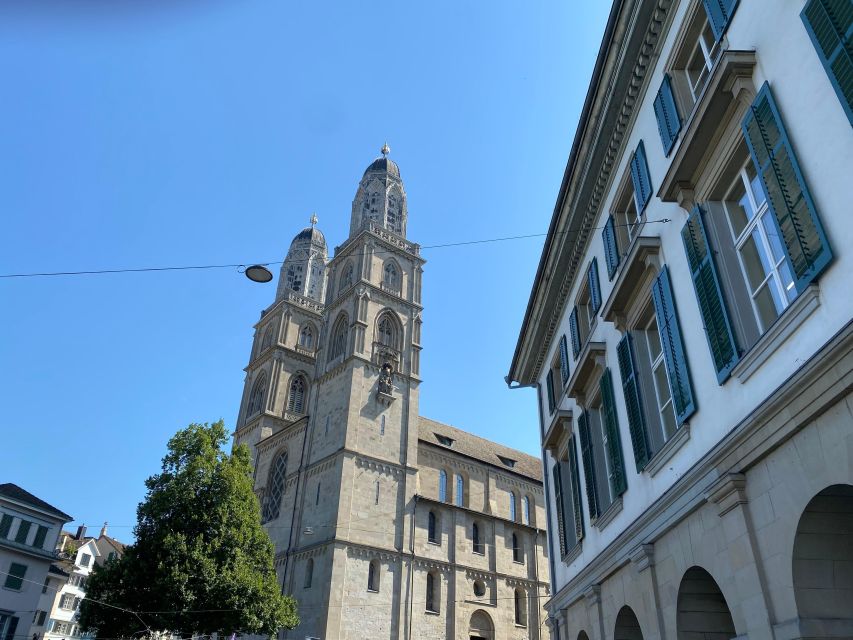
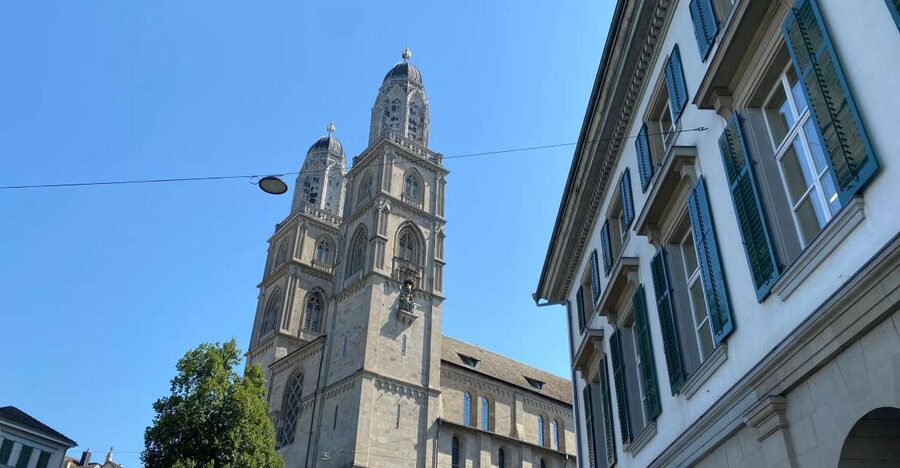
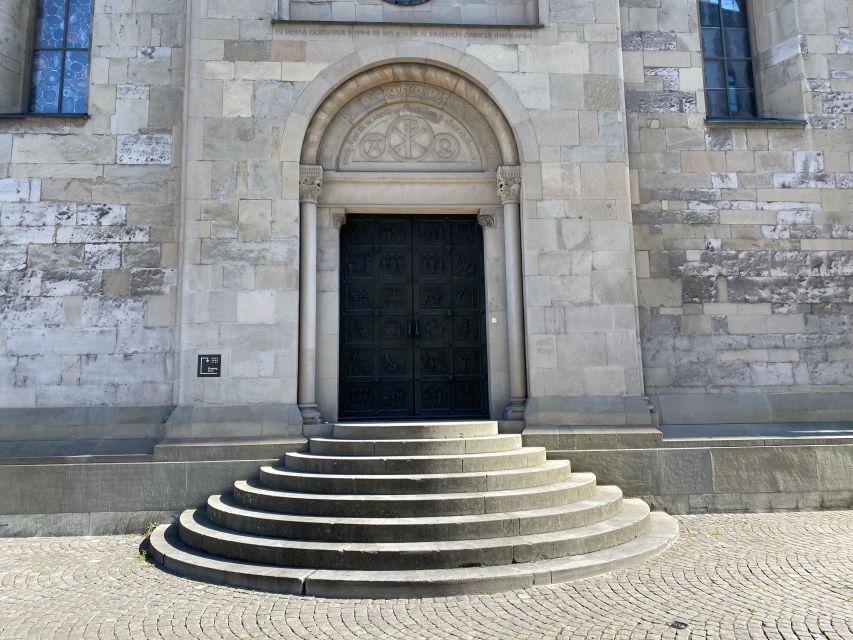
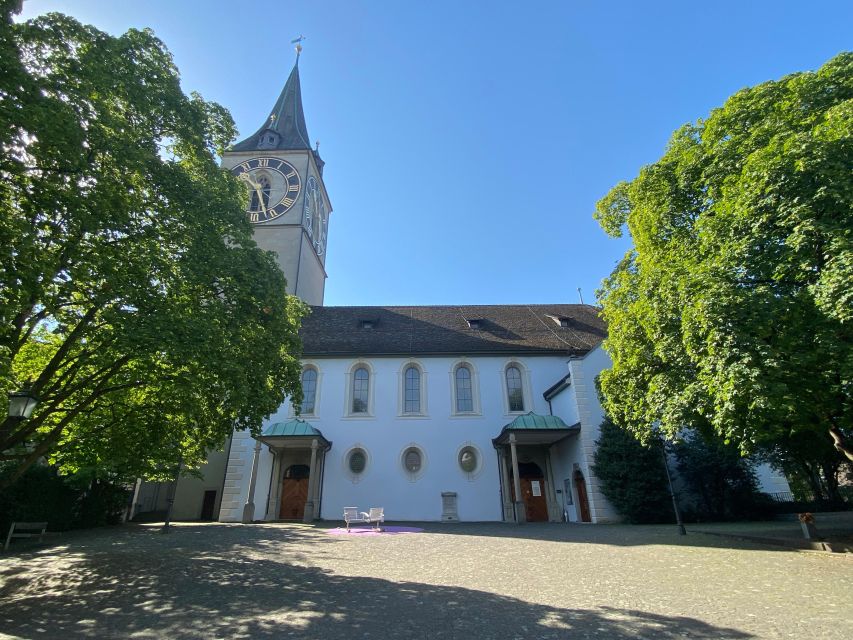
Zurich’s three major churches form the heart of the historical route: Grossmünster, Fraumünster, and Water Church.
Grossmünster is tied to the religious and political changes that shaped Zurich. The tour also connects the city’s story with Ulrich Zwingli, one of the important figures honored along the route. His presence helps explain why Zurich became a major center of the Swiss Reformation.
Fraumünster gives you another essential stop in the old town. Along with its architectural importance, it helps complete the picture of Zurich’s religious past. Water Church adds a third landmark close to the river, giving you a compact group of major sights rather than scattered attractions.
I like this section because it gives first-time visitors a clear framework. Instead of seeing three impressive churches as separate photo stops, you can consider how they relate to the city’s beliefs, leadership, and public life.
The description does not promise interior admission or a guided visit inside any church. Plan on hearing about and viewing the buildings from the route, rather than expecting entrance tickets or special access.
City Hall and the guild houses
City Hall is another major stop, and the route also highlights historic guild buildings linked with millers, bakers, salt and spice merchants, and the Masonic Lodge.
These buildings are valuable because they show Zurich as a working city, not only a place of grand churches and wealthy institutions. Guilds shaped trade, crafts, social rank, and political influence. A baker’s guild and a salt and spice merchants’ guild point to the practical businesses that helped the city grow.
The Masonic Lodge adds a different kind of story. Its inclusion suggests that the route is interested in buildings with unusual associations, not just the most photographed façades.
As you move between the guild houses, look for details that might otherwise pass unnoticed. The audio guide is particularly useful here because a building can look attractive without explaining why it mattered.
Roman Baths and the city before the modern era
The Roman Baths introduce an older layer of Zurich. This stop reminds you that the city’s story did not begin with the medieval churches or the modern financial district.
The appeal is partly visual and partly chronological. After hearing about reformers, guilds, and civic leaders, you reach evidence of an earlier period and get a wider sense of how long people have lived and worked in this area.
This is the sort of stop that can be easy to miss if you explore without a plan. It is not necessarily as immediately grand as Grossmünster or Bahnhofstrasse, but it adds useful depth to the walk.
If ancient remains are your main interest, keep your expectations measured. The activity promises a visit to the Roman Baths as part of the route, but it does not describe a museum-style presentation, excavation tour, or extended archaeological explanation.
Cabaret Voltaire and Lenin’s House
Two of the more unusual points are Cabaret Voltaire and Lenin’s House.
Cabaret Voltaire connects Zurich with an important artistic and cultural chapter. Its inclusion keeps the walk from becoming only a tour of churches and government buildings. You get a glimpse of the city as a place where artistic ideas and political thought also took root.
Lenin’s House adds another personal and political story. Rather than treating Zurich as isolated from world events, this stop links the city to a figure whose time there formed part of a much larger European drama.
These are excellent examples of why the route may appeal to repeat visitors. If you have already seen the major churches, you can still find fresh subjects in the places tied to art, exile, politics, and intellectual life.
The activity does not state that you enter either location. You should expect an exterior stop and audio commentary unless the booking information provides something more specific.
Monuments to reformers, builders, and civic leaders

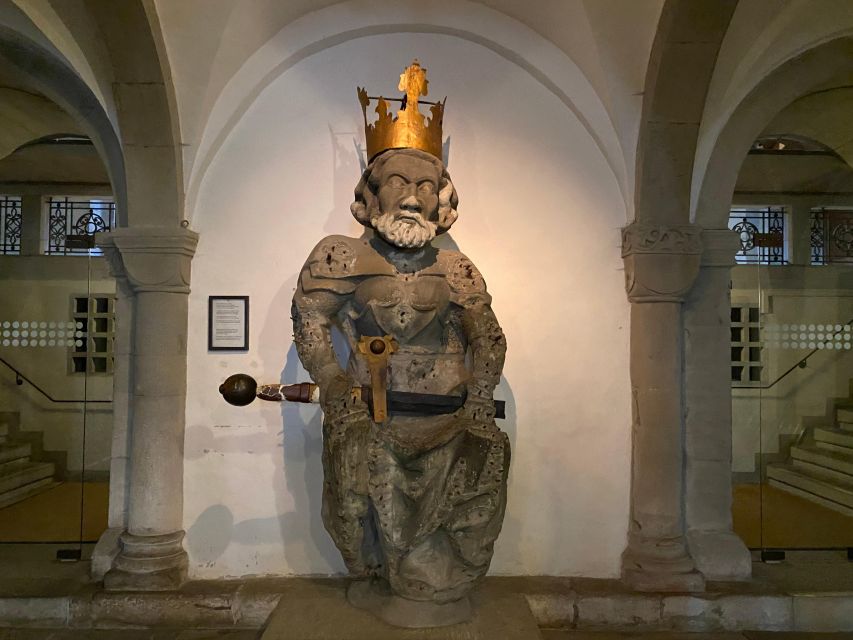
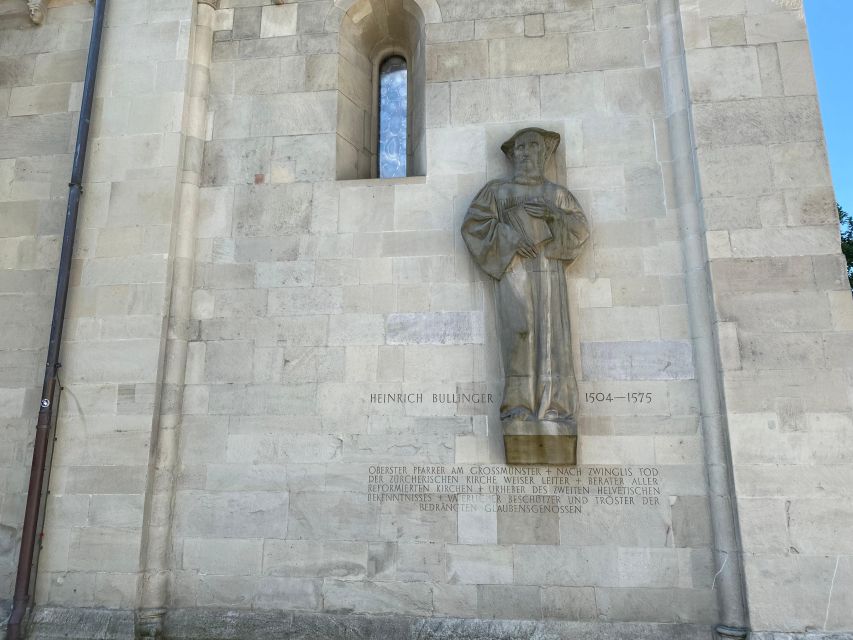
Several monuments give the route a strong civic focus. They include tributes to Alfred Escher, Johann Heinrich Pestalozzi, Ulrich Zwingli, and Hans Waldmann.
Each name points to a different side of Zurich. The route presents people connected with education, religion, politics, public works, and city leadership. That range helps you see how Zurich was shaped not by one founder, but by people with different aims and methods.
The stories also seem willing to address uncomfortable subjects. You may hear about executions, failed hopes, political maneuvers, and decisions that caused harm. That is a welcome change from sightseeing commentary that treats every historical figure as a hero.
I would recommend listening closely at the monuments instead of rushing past them. Public statues often become invisible to people who do not know whom they represent. Here, they are part of the main narrative.
Sculptures, observatory, and smaller discoveries
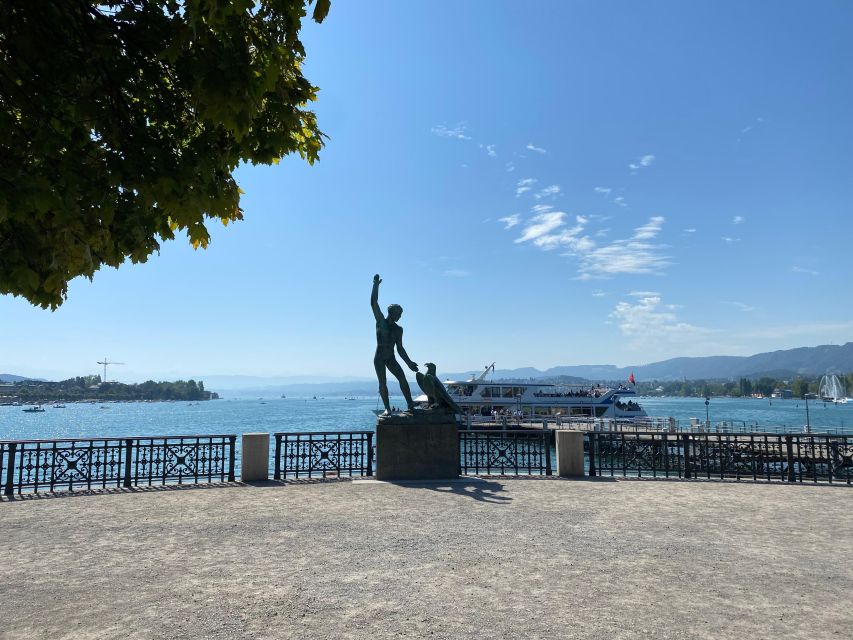
The route includes the Ganymed and Pavilion sculptures, as well as the Urania Observatory.
These stops add variety. You are not simply moving from one stone church to another. Art, science, public design, and city planning all receive a place in the walk.
The Urania Observatory is especially helpful for showing Zurich’s interest in science and public knowledge. The sculptures offer a more visual break from the historical narration, and they may appeal to you if you enjoy finding public art during a city walk.
The tour also points out enchanting houses and buildings connected with specific trades or groups. This is where the audio guide can do its best work. A short explanation can turn an ordinary-looking façade into a clue about Zurich’s social structure.
Because the route contains so many categories of stop, the experience may feel fast if you try to give every location equal attention. I would allow the full two and a half hours and pause the audio when something catches your eye.
What the two to two and a half hour length means
The stated duration is about two to two and a half hours. That makes this a manageable first look at central Zurich, not a full-day cultural program.
I like this length for a city arrival day. You can begin at Bahnhofplatz, get oriented, see the core landmarks, and still have time for a meal or another activity afterward.
The route may feel demanding if you expect long stops at every church, monument, sculpture, and historic building. The experience covers many points, so some locations will receive a short explanation rather than a full lecture.
Since it is self-guided, your actual timing can vary. You can pause, replay sections, take photographs, or move along quickly. The flexibility is one of the main reasons to choose this over a fixed group walk.
The $13 price and what you receive
At $13 per person, the cost is modest for a two-hour introduction to Zurich. You are paying for an English audio guide, a planned route, photos, and directions, with access valid for 365 days.
That price is strongest if you value independence. You do not pay for a live host, and you can choose your own pace. It is also useful if your schedule is uncertain and you want an activity that remains available long after the booking date.
The value is less certain if you need hands-on navigation or personal answers. One piece of feedback specifically found the photos and route description could be better and suggested a stronger Google Maps connection. If you are uncomfortable following a link and checking directions on your phone, a live walking tour may suit you better.
The 365-day period is generous, but do not mistake it for unlimited on-demand access without checking. The information says to check availability for starting times, so confirm the available schedule before relying on a particular hour.
Phone, internet, and the public holiday warning
You need three basic things: headphones, a charged smartphone, and internet access.
Download or open the supplied link before you leave the station area if possible. The activity is built around the link provided after booking, and there is no live guide to solve a technical problem at the starting point.
One booking failed because the Zurich information center at the station was closed on a public holiday. That is a useful warning: do not assume an information desk will provide backup assistance. The self-guided experience is meant to begin through the booking link, so keep your confirmation accessible on your own phone.
The audio guide is in English. The available feedback describes the language as easy to understand, which is a plus if English is not your first language.
Who should choose this Zurich walk?
I would choose this activity if you want a broad introduction to Zurich and prefer to move independently. It suits solo visitors, couples, and small groups who dislike fixed meeting times or want to stop for photos without holding up a guide.
It also suits repeat visitors who have seen the headline sights but want stories about Cabaret Voltaire, Lenin’s House, guild buildings, monuments, and public art.
Families may like the freedom to pause, though the historical themes include political violence, executions, and other serious subjects. The activity is not suitable for wheelchair users, so accessibility needs should be considered before booking.
You may want another option if you require a live guide, detailed personal interpretation, or guaranteed map-style navigation. The route is designed for independent use, and that means you carry responsibility for the technology and directions.
Should you book it?
Book this audio walk if you want an inexpensive, flexible way to see Zurich’s central landmarks while hearing stories about the people behind them. The strongest features are its wide coverage, clear English narration, unusual historical stops, and year-long validity.
Skip it if you want a guided conversation, interior visits, or highly polished turn-by-turn navigation. Before starting, charge your phone, bring headphones, confirm your internet connection, and open the route link. With those basics in place, the $13 fee can buy a useful first orientation to Zurich without locking you into a group schedule.
FAQ
Where does the self-guided audio tour begin?
It begins at Bahnhofplatz in Zurich, near the city’s main railway station.
Is there a live guide at Bahnhofplatz?
No. This is a self-guided activity, and no live guide will be present at the meeting point.
How long does the route take?
The walk takes about two to two and a half hours.
What language is the audio guide in?
The audio guide is in English.
What do I receive with the audio guide?
You receive an English audio guide with route explanations, photos, and detailed directions through a link provided after booking.
What equipment should I bring?
Bring headphones, a charged smartphone, and internet access.
How long is the booking valid?
The activity is valid for 365 days. You should check available starting times before choosing when to begin.
Which major churches are included?
The route includes Grossmünster, Fraumünster, and Water Church.
Does the route include places beyond the main tourist sights?
Yes. It includes the Roman Baths, Cabaret Voltaire, Lenin’s House, Urania Observatory, guild buildings, monuments, and the Ganymed and Pavilion sculptures.
Is the activity suitable for wheelchair users?
No. The activity is listed as not suitable for wheelchair users.
More Audio Tours in Zurich
- Self-Guided Audio Tour to the Dark Side of Zurich
★ 4.5 · 14 reviews - Historical Zürich: A Self-Guided Audio Tour Through the city of 1,000 Fountains
★ 5.0 · 11 reviews - Basel: Sightseeing Bus Tour with Audio Guide
★ 4.2 · 205 reviews - The Many Faces of Geneva: Self-Guided Audio City Tour
★ 3.9 · 44 reviews
Just added around Zurich
- 2 Hour Floating Harmony Couples Course★ 5.0 · 3 reviews
- From Zurich: 7-Day Tour to Geneva with Tickets and Lodging★ 5.0 · 3 reviews
- Lake Zurich boat tour for an afternoon !★ 5.0 · 3 reviews
- Lake Zurich mini boat tour / by night!★ 5.0 · 3 reviews
- Zurich: Private tour to Interlaken, Grindelwald & Jungfrau★ 5.0 · 3 reviews
- Zurich Premium Fitness Pass★ 3.0 · 3 reviews
- Central Switzerland (Private Tour)★ 5.0 · 3 reviews
- Wakeboarding Lake Zurich – afternoon !★ 5.0 · 3 reviews
Zurich Tours, compared.

Zurich: Day Trip to Grindelwald, Interlaken & Lauterbrunnen
Read our review →
Zurich: City Tour, Cruise, and Lindt Home of Chocolate Visit
Read our review →
From Zurich: Bus Day Trip to Heidiland and Liechtenstein
Read our review →
Zurich: City Highlights Tour by Bus, Cable Car, and Ferry
Read our review →
Mount Titlis and Lucerne Day Trip from Zurich
Read our review →

Heidiland and Liechtenstein Tour from Zurich
Read our review →Browse the lists this tour appears in