
Reviewed · GENEVA TOURS
The Many Faces of Geneva: Self-Guided Audio City Tour
Geneva’s sights take on a sharper edge when you connect them to human behavior. This self-guided audio tour links the Jet d’Eau with good deeds, the Flower Clock with pride, Rousseau with social equality and personal failings, and the Reformation Wall with accusations of hardness and inflexibility. I like the unusual theme, and I like that the route covers nearly all of Geneva’s best-known central sights in about two hours.
You control the pace, language, and start date, with access valid for 365 days. The tradeoff is simple: there is no live guide to answer questions or rescue you if the technology misbehaves. The moral stories may also feel fascinating to one person and boring to another, so this tour suits curious adults more than families seeking a light, entertaining walk.
Key points to know before you book
- A walking tour with a moral theme: Geneva’s monuments are explained through virtues such as courage, justice, temperance, and mercy, alongside sins such as envy, anger, pride, and excess.
- A useful central route: You visit the Sissi Monument, Jet d’Eau, Brunswick Monument, Rousseau Monument, National Monument, Flower Clock, Palace of Justice, St. Pierre Cathedral, Town Hall, Reformation Wall, and several other stops.
- Audio in English or French: A professional speaker provides the narration, while photos and written directions help you follow the route.
- Flexible timing: The experience lasts about 1.5 to 2 hours, but your booking remains valid for a full year.
- Best for independent adults: Children under 16 and wheelchair users are not considered suitable for this route.
- Bring your own setup: You need a charged smartphone, internet access, and headphones. There is no in-person guide.
Geneva through sins, virtues, and famous monuments

Most city walks give you dates, names, and architectural labels. This one uses a different frame. It asks you to look at Geneva as a place where noble ideals and human weaknesses keep crossing paths.
That approach works because Geneva’s center is compact and full of monuments with strong personalities attached to them. The tour does not simply point out a fountain or statue. It asks what the object says about courage, justice, pride, mercy, or anger. At its best, this makes familiar sights easier to remember.
The tone is more reflective than playful. You hear about people who promoted equality but admitted to questionable personal behavior, institutions that helped the poor but also confined vulnerable people, and religious leaders praised for reform yet criticized for harshness. I would choose this walk if you enjoy history with an ethical question attached.
If you prefer a guide who tells jokes, takes questions, and adjusts the route to the mood of the group, this is not that experience. The narration follows a set path. You listen, look around, and decide for yourself what you think of the people and institutions described.
More Self-Guided Trails in Geneva
- From Geneva: Self-Guided Chamonix-Mont-Blanc Excursion
★ 4.2 · 123 reviews - Self-Guided Chamonix with Aiguille du Midi or Mer de Glace
★ 3.5 · 35 reviews - Chamonix Self-guided Sightseeing Tour from Geneva
★ 4.0 · 34 reviews
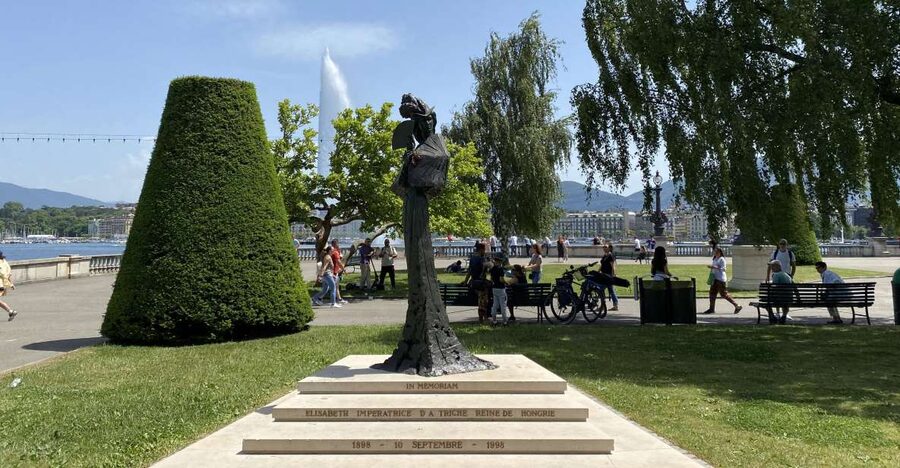
Starting at the Sissi Monument
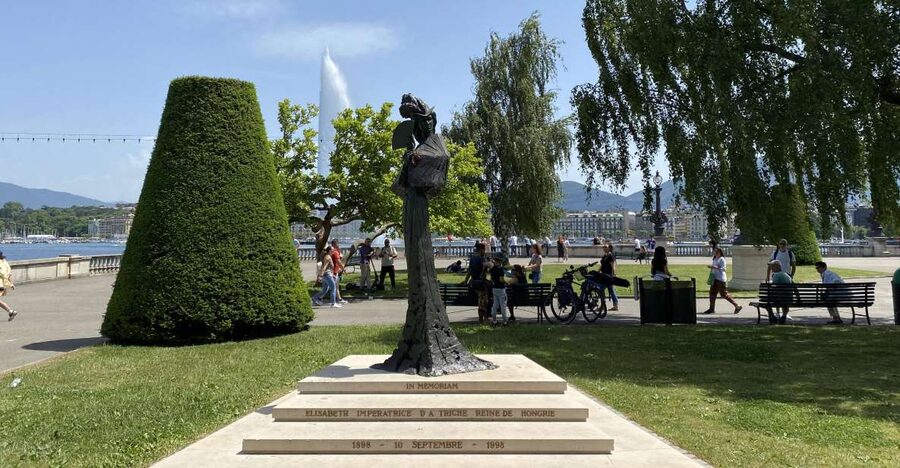
The route begins at the monument to Empress Elisabeth of Austria, known as Sissi. This is an effective opening because her story immediately introduces the tour’s interest in the contrast between public image, personal tragedy, and human violence.
You learn how and why the empress was killed by an anarchist who stabbed her. The stop gives the tour an early connection to anger and political unrest, but it also reminds you that Geneva’s monuments are not only about grand ideas. They are tied to real people, real actions, and sometimes sudden death.
You should arrive with your phone charged and your headphones ready. Since there is no guide waiting at the meeting point, you begin by opening the link supplied after booking. The directions include photos, which should help you identify the correct starting location and stay on course.
Jet d’Eau and the idea of doing good
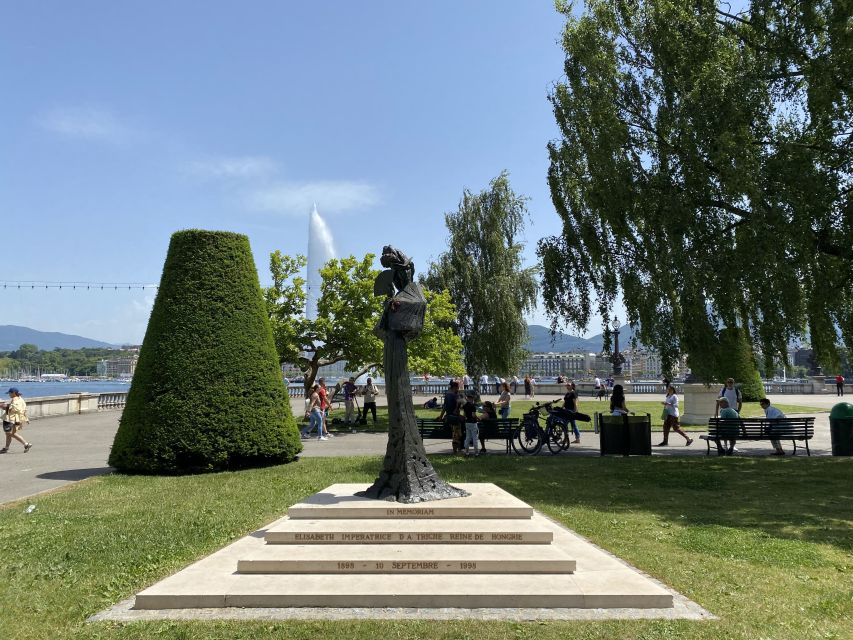
From the Sissi Monument, the route moves toward the Jet d’Eau, Geneva’s giant water fountain and one of the city’s most familiar sights. The tour presents it from a moral angle, asking how this fountain can be connected with making the world better.
That may sound like an odd match for a hydraulic landmark, but it is exactly the kind of connection that gives this walk its identity. You are not simply told to take a photograph and move on. You are encouraged to consider public works, shared spaces, and the ways a city can express something generous or uplifting.
The fountain is also a good early stop because it gives you a clear visual anchor. If you are new to Geneva, you will quickly recognize where you are. Keep in mind that the audio may not explain every practical detail you want, such as the best photo angle or how the fountain operates at a particular moment. Its priority is the story, not a full sightseeing guide.
Brunswick Monument, Rousseau, and complicated reputations
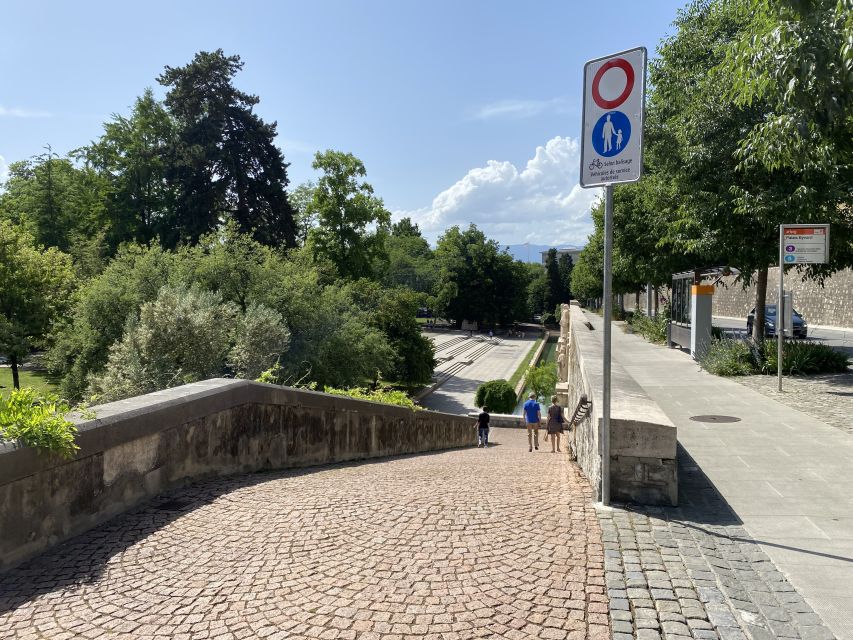
The Brunswick Monument adds another layer. You are asked to look for images of virtues on the monument itself. This is a useful reminder to inspect the stonework instead of glancing at the monument and walking on.
Next comes the monument to Jean-Jacques Rousseau. Rousseau is associated with ideas of social equality, yet the tour also discusses affairs with married women that he confessed to. That contrast is one of the route’s clearest examples of its method: a person can put forward admirable ideas while behaving in ways that do not match them.
I like this stop because it avoids turning a famous thinker into a spotless hero. You receive a more human picture, though the presentation is necessarily brief. In a 1.5 to 2-hour route, you should expect sharp anecdotes and moral contrasts rather than a full biography of Rousseau.
A few more Geneva day trips to weigh up
- Geneva Virus Run: Stop the Infection Exploration Game
★ 4.0 · 17 reviews - Self-Guided Audio Tour to the Many Faces of Geneva
★ 4.5 · 10 reviews - Unusual Audio Tour of Geneva
★ 5.0 · 8 reviews - A Self-Guided Audio Tour of Geneva’s Old Town
★ 4.5 · 7 reviews
The National Monument and Geneva’s civic identity
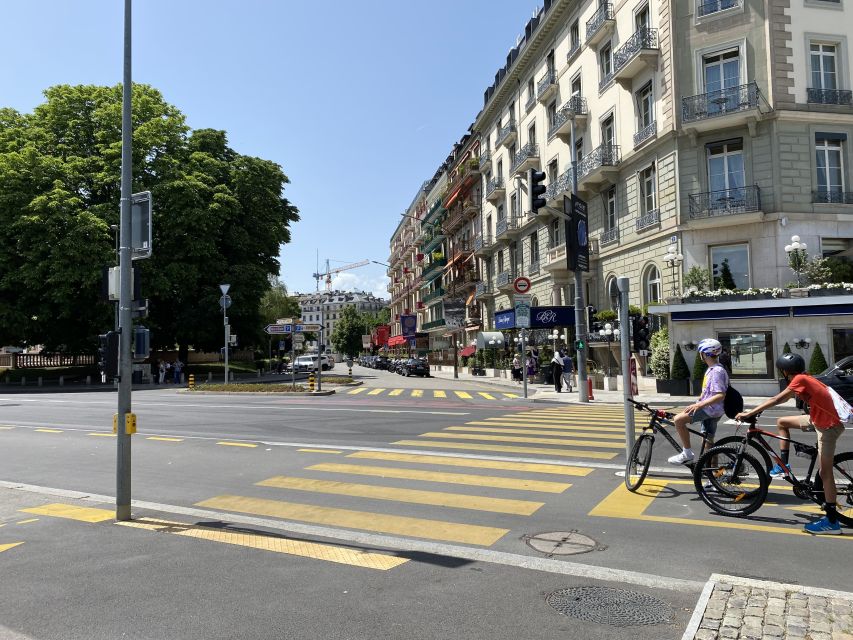
The National Monument is the next notable stop. Here, the audio explains why this particular monument won a competition. That detail gives you a practical reason to study its design and not treat it as another statue in the city center.
The stop also broadens the tour beyond personal behavior. Some sections focus on individuals and their failings. Others look at how Geneva presents its civic ideals through public art. If you pay attention to that change, the route becomes more than a list of moral labels.
The audio’s photos and directions are helpful here. A self-guided route can be less satisfying when you are unsure which monument you are meant to examine, so visual prompts matter. Still, you remain responsible for matching the image with what you see around you.
The Flower Clock and the problem of pride
The Flower Clock offers one of Geneva’s most recognizable photo stops. The tour connects it with pride, which gives an ordinary sightseeing moment a more pointed question: when does civic identity become vanity?
You will likely want to pause here, take a picture, and listen without rushing. It is a good example of how the experience uses familiar attractions as prompts for thought. You already know the Flower Clock is decorative and famous. The audio asks you to consider what it means for a city to display such a carefully presented symbol of itself.
This is also where the tour’s style may divide opinion. If you enjoy unusual interpretations, the connection is memorable. If you want straightforward facts about the clock, you may find the moral framing less useful.
Palace of Justice and Geneva’s idea of mercy

The Palace of Justice brings justice directly into the route. The audio explains why the building is associated not only with justice but also with mercy. That pairing is important. A courthouse represents rules and punishment, but a fair system also has to consider human circumstances.
This stop should appeal to anyone interested in how cities express their values through institutions. You are not being asked to enter for a court hearing or join a formal visit. The focus is on the building and the ideas attached to it.
The route then includes a Lutheran church, where you hear how different religions view the effect of sins and good deeds on salvation. This adds a religious dimension without limiting the tour to one tradition. It also fits Geneva particularly well, since the city’s identity is closely tied to religious debate and reform.
The discussion may feel dense if you are expecting a casual walk. I would listen carefully here, especially if questions of guilt, forgiveness, and moral judgment interest you. The tour is strongest when you give each stop a moment instead of treating the audio as background noise.
A fighter for justice and Geneva’s former red-light district
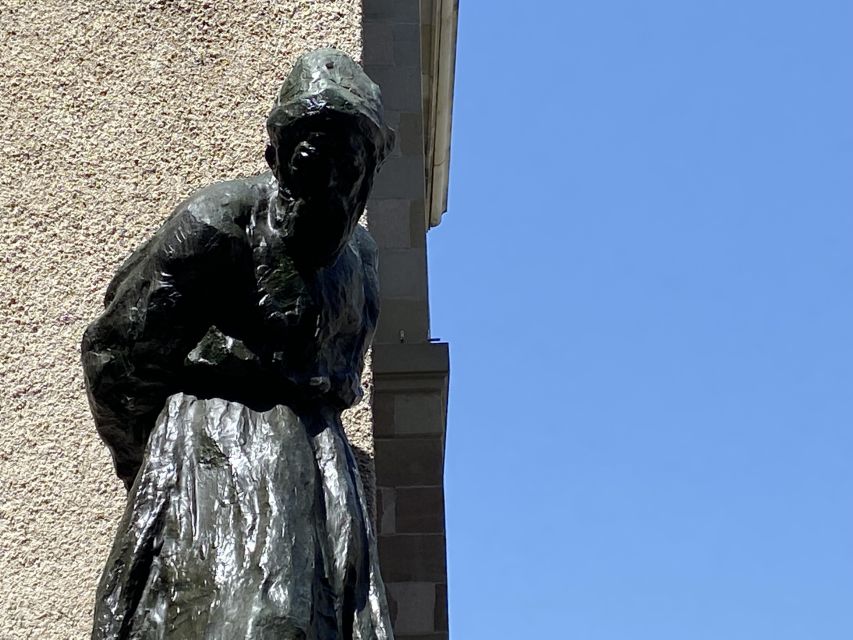
Another stop presents a monument regarded as a Genevan fighter for justice. The information supplied for the tour does not identify the figure by name in advance, so you will discover that detail during the audio.
The route also points out where Geneva once had a red-light district and explains the city’s history of prostitution. This is one of the more unusual subjects on a standard city walk. It adds social history to the tour and shows that Geneva’s past was not limited to churches, reformers, grand fountains, and wealthy patrons.
You should know that the experience is aimed at people aged 16 and over. That age restriction makes sense given the discussion of prostitution, political violence, punishment, and personal misconduct. Parents looking for a child-friendly introduction to Geneva should choose another format.
Jeremiah, St. Pierre Cathedral, and temperance

At the Statue of the Prophet Jeremiah, the audio explains why he is often called the weeping prophet. This stop continues the tour’s interest in sorrow, regret, and human weakness.
The route then reaches St. Pierre Cathedral, where you learn why it is associated with temperance. The cathedral is one of the key sights in Geneva, and the moral theme gives you a reason to look at it beyond its religious and architectural importance.
Temperance is a fitting idea for a city walk because it also describes how to use the tour itself. You can pause when you need to, replay sections if the connection permits, and avoid racing from point to point. The advertised route takes 1.5 to 2 hours, but the actual experience depends on how long you spend listening and looking.
Do not expect a full interior tour of the cathedral from the information provided. The stop is about the cathedral’s connection to temperance and the story told by the audio.
Town Hall and the stone bench of death sentences
Geneva’s Town Hall provides one of the route’s starkest details. You see a long stone bench where the judges of Geneva pronounced death sentences, then hear about some of those cases in more detail.
This is the kind of small physical feature that can disappear in a normal sightseeing circuit. A bench may look like a simple piece of stone until you know what happened there. Once you hear the story, the Town Hall becomes connected with the weight of judgment, punishment, and the consequences of law.
I appreciate stops like this because they make the route feel grounded. The tour’s themes can sometimes sound abstract, but a specific bench and the sentences pronounced upon it give justice a human scale.
At the same time, the material is not light. If you want a cheerful orientation walk on your first morning in Geneva, you may prefer to leave this tour for later in the day, or for a visit when you are ready for more serious subjects.
The Reformation Wall and accusations of hardness
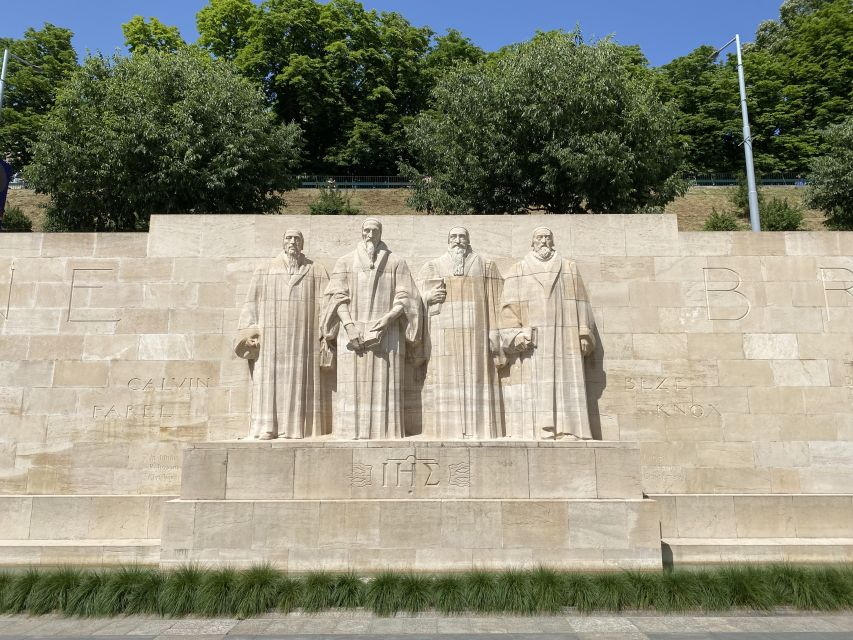
The Reformation Wall is one of the tour’s major closing sights. The audio identifies the theologians depicted there and explains which were criticized for inflexibility, mercilessness, and heartlessness.
The wall is already an important place for understanding Geneva. Here, the moral theme lets you see the figures not only as founders or symbols, but also as people whose decisions could be judged harshly by later generations. The route does not ask you to accept a simple good-versus-bad story.
This is probably the most useful stop for understanding the tour’s overall idea. Virtue and vice do not belong to separate groups. Courage can sit beside anger. Justice can be mixed with cruelty. Religious reform can come with strictness. The wall gives those contradictions a memorable setting.
Dufour, Dunant, and the final lesson about courage
The route continues to the statue of Guillaume-Henri Dufour and the bust of Henri Dunant. You learn how both men struggled with evil, bringing the theme of courage into the final part of the walk.
Dufour and Dunant give the tour a more hopeful finish. Earlier stops have raised questions about violence, pride, confinement, punishment, and hypocrisy. These final figures shift attention toward people who confronted suffering or wrongdoing rather than simply commenting on it.
The last stop is a fountain described as evidence of the courage of the Genevans. The supplied information does not name the fountain, so you will need to follow the audio and visual directions to identify it. Ending with courage gives the route a clear emotional direction, even if you may want more detail about the fountain itself.
What the audio format is really like
The audio guide is recorded by a professional speaker and comes in English or French. You receive a link after booking, then use your own phone and headphones to follow the route.
The included photos and detailed directions are important. They help you find each stop without a person leading the way. You also avoid the common group-tour problem of being pulled along before you have finished looking at a monument.
The price is $13 per person. For that amount, I see good value if you plan to visit Geneva once and want a structured route with interpretation. You are paying for a themed introduction to the city, not admission to attractions, transport, food, or a personal guide.
Your access lasts 365 days, which is unusually flexible. You can buy it well ahead of a trip, use it on a later date, or keep it available for another visit during the validity period. The activity also allows cancellation up to 24 hours before the planned start for a full refund, and you can reserve now and pay later.
Technology is the main practical concern. Bring a charged smartphone, internet access, and headphones. If your battery is low, your connection is unreliable, or you dislike listening while walking, the format will work against you.
Who should choose this Geneva walk?
I would choose this experience for an adult visiting Geneva independently, especially if you want to cover the central sights without joining a group. It is also a good fit if you like ethical questions, religious history, political ideas, and stories about flawed public figures.
The self-paced design suits different schedules. You can begin when convenient within the booking arrangement, stop for photographs, and take breaks along the route. The year-long validity is useful if plans change.
I would be more cautious if you want a simple history lesson. The route’s unusual focus on sins and virtues shapes every stop. That is the reason to book it, but also the reason some people may find the narration boring.
The rating of 3.9 from 44 ratings reflects that mixed appeal. The strongest response has come from the flexible pacing and the way the audio provides context across a range of Geneva sights. The weaker response is easy to understand: a fixed moral theme will not suit every listener, and the absence of a live guide means nobody can adapt the presentation to your interests.
Should you book The Many Faces of Geneva?
Book it if you want an inexpensive, independent orientation with an original point of view. At $13, it is a reasonable way to connect the Jet d’Eau, cathedral, Town Hall, Reformation Wall, and other central sights while hearing stories that ordinary photo stops often miss.
Skip it if you need personal guidance, wheelchair access, or a child-friendly outing. Also skip it if your ideal tour is upbeat and purely factual. For the right audience, the reward is not just seeing Geneva, but leaving with a more complicated view of its heroes, institutions, beliefs, and public symbols.
FAQ
How long does The Many Faces of Geneva tour take?
The walking route takes about 1.5 to 2 hours.
How much does the tour cost?
The listed price is $13 per person.
How long is the booking valid?
The experience is valid for 365 days. Check availability for starting times.
Is there a live guide?
No. This is a self-guided audio tour, and no live guide is present.
Where does the tour begin?
The tour begins at the Monument to Empress Elisabeth, known as Sissi, in Geneva.
Which languages are available?
The audio guide is available in English or French.
What do I need to bring?
Bring headphones, a charged smartphone, and internet access.
Is the tour suitable for children and wheelchair users?
The activity is not suitable for children under 16 or for wheelchair users.
Can I cancel for a full refund?
Yes. You can cancel up to 24 hours in advance for a full refund.
More Audio Tours in Geneva
- Zurich: City Bus Tour with Audio Guide and Lake Cruise
★ 4.3 · 1,195 reviews - Zurich City Tour with Audio Commentary
★ 4.0 · 372 reviews - Zurich: City Top Attractions Tour by Bus with Audio Guide
★ 4.3 · 282 reviews - Basel: Sightseeing Bus Tour with Audio Guide
★ 4.2 · 205 reviews
Just added around Geneva
- Geneva Welcome Tour: Private Tour with a Local★ 5.0 · 3 reviews
- Geneva Private Walking Tour★ 5.0 · 3 reviews
- Geneva: Highlight Tour in TukTuk★ 5.0 · 3 reviews
- Geneva: Day Trip to Chamonix, Geneva City Tour + Cruise★ 3.0 · 3 reviews
- Private Photo Tour LUXE CUSTOM in Geneva★ 4.5 · 3 reviews
- Alpine Tour Across Switzerland★ 5.0 · 3 reviews
- Geneva Crown★ 5.0 · 4 reviews
- Geneva Countryside By E-Bike With Wine Tasting★ 4.0 · 4 reviews
Geneva Tours, compared.

Award-Winning Geneva Chocolate &Old Town Tour with Boat Ride (3h)
Read our review →
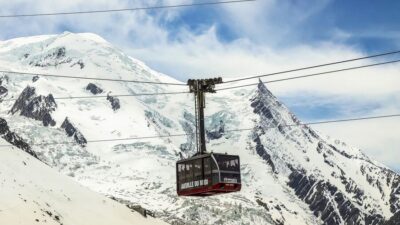
Chamonix & Mont Blanc Scenic Glass-Roof Bus Tour from Geneva
Read our review →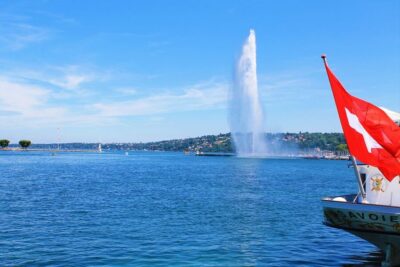
Geneva: Scenic Lake Cruise with Snacks and Wine
Read our review →
Chamonix & Mont Blanc Panoramic Sky-Glass Bus Guided Day Trip
Read our review →
From Geneva: Day Trip to Chamonix with Cable Car and Train
Read our review →

Browse the lists this tour appears in