

Reviewed · ZURICH TOURS
Self-Guided Audio Tour to the Dark Side of Zurich
Zurich’s polished streets hide a grim past. This self-guided walk brings that past into focus with stories of witches, executioners, drowning, torture, public shame, and death sentences. You begin at Paradeplatz and finish at Herkulesbrunnen, passing churches, statues, old houses, and former punishment sites along the way.
I like the clear route instructions and the way the tour leads you into corners of the old city you might otherwise pass without noticing. I also like the flexible format: you can pause for a church visit, take a photo, or stop for a drink without holding up a group.
The main drawback is the subject. This is not a light sightseeing stroll. The audio contains grim material about torture and executions, and some listeners may find the narration a little fact-heavy or repetitive. You also need your own phone, internet connection, and headset, with no live guide to solve technical problems on the spot.
Key points of the Zurich dark-history walk
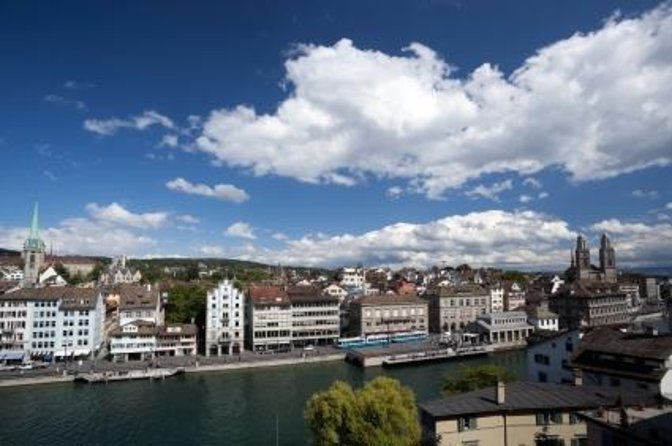
- Fourteen stops connect ordinary streets with punishment and witch-hunt stories.
- The route runs from Paradeplatz to Herkulesbrunnen and takes about one to two hours.
- A professional speaker provides the English narration, with directions and photos on your phone.
- Fraumünster Church adds a major art stop, but interior admission costs CHF 5.
- The self-guided format lets you walk alone or with your private group at your own speed.
- The walk costs $13.22 per person, making it a low-cost alternative to a longer live tour.
Why Zurich’s bright center has a dark side
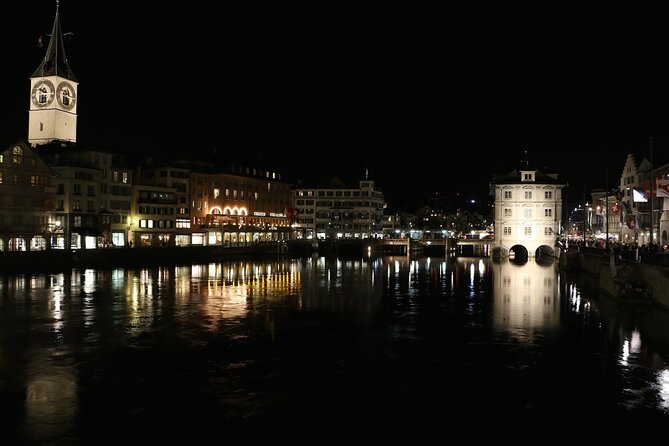
Zurich is often sold through lake views, polished shopping streets, guild houses, and church towers. This walk changes the mood by asking you to look at the same city through the systems that once punished people.
At Paradeplatz, the financial center becomes the starting point for a story about executioners. Along the Limmat, the river becomes part of a tale of religious persecution and torture. Near the Town Hall, a public square recalls the formal process by which authorities pronounced death sentences.
That contrast gives the tour its appeal. You are not heading to a remote dungeon or a purpose-built museum. You are walking through everyday Zurich, where normal streets once carried very different meanings.
The route also reaches beyond witchcraft. You hear about Hans Waldmann, a powerful Zurich figure executed in 1489, the martyrs Felix and Regula, the city’s pillory, drowning as punishment, and the baker who supplied the last sip to condemned people.
The stories are short at each stop, usually about five minutes. That format keeps the walk moving, though it can also make the presentation feel like a series of facts rather than one long story.
More Self-Guided Trails in Zurich
- Zurich: City Bus Tour with Audio Guide and Lake Cruise
★ 4.3 · 1,195 reviews - Zurich City Tour with Audio Commentary
★ 4.0 · 372 reviews - Zurich: City Top Attractions Tour by Bus with Audio Guide
★ 4.3 · 282 reviews
Paradeplatz and Börsenstrasse: meeting the executioner
The tour opens at Paradeplatz, a central location that is easy to reach by public transport. Here, the focus is the former residence of a Zurich executioner and the unusual profession attached to it.
You learn about the training required for the work. That detail is useful because it moves the executioner away from the simple image of a hooded figure with an axe. The job required skill, practice, and a place within the city’s official system, even though the person performing it occupied an uneasy social position.
From Paradeplatz, the walk continues along Börsenstrasse. The setting is modern and busy, which makes the medieval subject feel particularly strange. This was connected with the executioners who lived and worked in the city.
The audio covers popular execution methods, the executioner’s pay, and how often public executions took place. These practical details are among the strongest parts of the tour because they explain how punishment functioned as an organized civic service.
You may find the material blunt. That is part of the point, but it also establishes the tour’s tone early. If you prefer architecture, art, and gentle legends, this opening may feel heavier than expected.
The Limmat and Fraumünster: torture beside a beautiful church
At the Limmat, the tour turns to the tortured witches of Zurich, including the story of Elsbeth and the fifteen days she endured under torment. This is one of the most difficult stops because it focuses on the human cost of accusation and prosecution rather than on abstract legal history.
The river setting gives the story a quiet backdrop, but the audio does not soften the subject. This stop is best approached as a reminder that witch-hunts were not just a collection of old legends. They involved real people, formal accusations, and painful punishment.
Next comes Fraumünster Church. The church is one of Zurich’s major sights, and its interior is known for Marc Chagall’s stained-glass windows. The route connects the church with the religious world surrounding the darker stories, but the building also gives the walk a needed visual change.
Entry is not included. If you want to go inside, admission is CHF 5 per person. I would allow extra time here if the church is part of your Zurich plans, since the tour itself gives you only a short stop and the windows are the main reason to enter.
A practical point: the audio walk does not include any church admission, so bring a separate budget for Fraumünster. The rest of the listed stops are viewed from public spaces and have no admission charge.
Hans Waldmann and Wasserkirche: power, faith, and execution
The Hans Waldmann Statue recalls a Zurich leader executed in 1489. His story adds political power to a route otherwise centered on witches and public punishment.
This stop matters because it shows that execution was not reserved for people accused of magic or ordinary crime. A prominent figure could also fall from favor and meet a public death sentence. The statue lets you connect a specific person with the city’s wider system of authority.
At Wasserkirche, or Water Church, the audio shifts to the legend of Felix and Regula. According to the story presented here, they were beheaded because of their Christian beliefs.
The church itself is an important part of Zurich’s religious identity, and the stop gives the tour a different kind of story. Instead of legal procedure or witchcraft, you hear about faith, martyrdom, and the way religious narratives become attached to places.
The route also passes the Grossmünster, Zurich’s famous church and a key symbol of the Swiss-German Reformation. It is a pass-by rather than a full stop, so you should not expect a detailed interior visit or a long explanation. Still, its location helps connect the walk’s religious stories with the city’s best-known church landmarks.
A few more Zurich day trips to weigh up
- The Dark Side of Zurich: Self-Guided Audio City Tour
★ 4.4 · 52 reviews - Zurich: Audio Guided City Tour and Train to “Top of Zurich”
★ 4.2 · 41 reviews - Einstein in Zurich: Walk in Time Exploration Game and Tour
★ 4.0 · 25 reviews - Self-Guided Audio City Tour in Zurich
★ 4.0 · 15 reviews
Kirchgasse and Untere Zäune: how witch-hunts worked
On Kirchgasse, the tour examines old advice about recognizing witches and using torture. This stop is valuable because it focuses on the tools of suspicion. Witch-hunts depended not only on accusations, but also on accepted methods for identifying, questioning, and punishing suspects.
The audio presents this material in a direct way. You are not simply hearing that witch-hunts happened. You are shown how beliefs and procedures could turn suspicion into a legal case.
At Untere Zäune, you pause near the home of a wealthy woman executed for witchcraft. Her social position makes the story worth noting. The accusation did not affect only the poor or powerless. A woman with wealth could also be drawn into the machinery of prosecution.
These two stops work well together. Kirchgasse explains the process, while Untere Zäune gives it a personal setting. You can picture how a house in an ordinary street became connected with a case that ended in execution.
The short stop length keeps the route manageable, but it limits how much background the narrator can provide. If you enjoy detailed legal or social history, you may want to treat the audio as an introduction rather than a complete study.
Neumarkt and Obere Zäune: shame and revenge

Neumarkt marks the former place of the pillory. Public shame was a punishment designed for an audience. The person was exposed in front of the community, turning embarrassment and judgment into part of the sentence.
This stop helps broaden the tour beyond killing. Medieval and early modern punishment also involved humiliation, confinement, and the public display of authority. A pillory site may look like an unremarkable part of the city now, which is exactly why the audio adds value.
At Obere Zäune, you hear about the home of a judge active during the peak of the witch-hunt and learn the story of his revenge. The location brings the people enforcing the system into the picture.
I find this part of the walk especially useful because it avoids presenting persecution as something that happened without decision-makers. Judges, officials, religious authorities, and witnesses shaped the results. The revenge story gives that institutional history a personal angle.
The surrounding streets are part of Zurich’s old town, so you can combine this section with your own wandering. Just remember that the experience is designed as an audio route, not a guided street performance. The buildings may not be marked with large signs explaining their connection to the story.
Zurich Town Hall and the Täufergedenkplatte: law and drowning
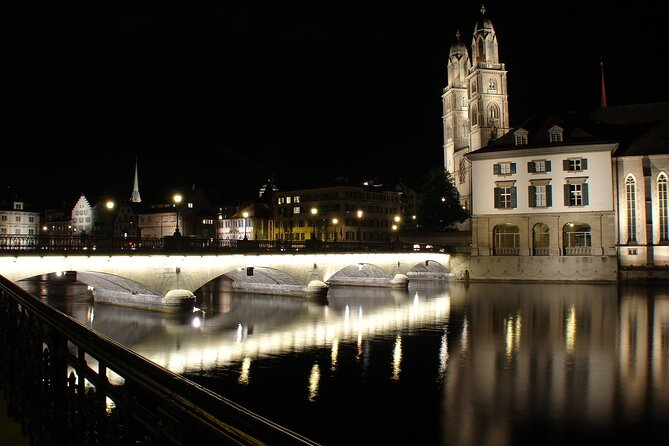
At Zurich’s Town Hall, the audio explains medieval prosecution and identifies the square where death sentences were pronounced. This is one of the clearest stops for understanding how the city turned accusation into official punishment.
The Town Hall provides a strong setting because it represents civic authority. You are hearing about courts and sentences in the presence of the building associated with the city’s government. The stop gives structure to the earlier stories about witches, judges, and executioners.
Next, the Täufergedenkplatte memorial plate recalls executions by drowning. The memorial offers a quieter moment in the route. Instead of focusing only on the dramatic act of execution, it points to remembrance and the way later generations mark past persecution.
The subject may be difficult for anyone sensitive to human rights abuses. The tour presents these events as part of Zurich’s past, but the material can still feel stark. I would not choose this walk for young children unless you already know they can handle discussions of torture, execution, and religious persecution.
Rennweg and Herkulesbrunnen: the final drink and the city gate
At Rennweg, the route visits the house of a baker responsible for giving the last sip to people headed for execution. This small detail brings an ordinary trade into contact with the punishment system.
It is one of the more memorable ideas on the walk because it shows how execution affected more than the officials who carried it out. Bakers, residents, religious figures, and passersby could all become part of the final stage of a condemned person’s journey.
The tour ends at Herkulesbrunnen on Bahnhofstrasse. Here, you learn where condemned people left the city and where burnings and hangings took place.
The finish gives the route a clear geographical shape. You start near Paradeplatz, move through the old center, cross a series of religious and civic landmarks, and end at the city’s edge as it once functioned. You do not need to return to the starting point, which is convenient if you have other plans in Zurich.
Allow one to two hours for the full walk. Each listed stop is planned for about five minutes, but your actual time will depend on walking speed, photos, traffic, pauses, and whether you enter Fraumünster.
How the audio format works in real use
After booking, you receive a link for the tour. You use your own mobile phone, internet connection, and headset. The narration is in English and is recorded by a professional speaker with a notably deep voice.
The route includes photos and detailed directions. That matters because a self-guided walk can otherwise become a hunt for the correct building or street corner. The instructions are designed to keep you moving from Paradeplatz to Herkulesbrunnen without a live guide.
There is no scheduled group and no guide waiting at the starting point. The activity is private to your group, so you can set your own pace and stop whenever you wish.
The main technical risk is loading time. If your internet connection is slow, the link may take a while to open or the audio may be slow to load. I would open the link before leaving, check that the narration works, and bring headphones with enough battery for the walk.
This format suits independent visitors who dislike fixed departure times. It is less suitable if you want to ask questions, hear spontaneous local commentary, or have someone adjust the route for your interests.
Is $13.22 good value for Zurich?
At $13.22 per person, this is a modest way to add structure to an old-town walk. You get a planned route, English narration, directions, photos, and a focused subject that is different from a standard city sightseeing tour.
The value depends on what you want. If you already plan to walk through central Zurich, the audio adds stories to places you may otherwise see only as attractive streets and buildings. You are paying for interpretation rather than for transport, admission, or personal guiding.
The price also compares favorably with a traditional live tour, though the two products are not identical. A live guide can answer questions and adapt the pace. This audio walk gives you privacy and flexibility instead.
The only extra admission mentioned is Fraumünster, which costs CHF 5 if you choose to enter. Every other listed stop is free to view from the route.
The tour is booked, on average, about seven days ahead. That figure is useful as a planning guide, but the flexible audio format means you should still check availability for your dates before building it into your schedule.
Who should choose this walk?
I would recommend it to an adult or older teen who likes unusual city stories and wants to see Zurich from a less polished angle. It works especially well for someone who has already seen the main churches and shopping streets and wants a different reason to walk through the old town.
It also suits independent visitors who value:
- A private experience with no group schedule
- A short route of one to two hours
- English narration
- A low price
- Clear directions rather than a map-heavy activity
- The ability to pause and continue at will
I would think twice if you are sensitive to torture, executions, or religious persecution. The subject is central, not incidental. I would also choose another activity if your main goal is a broad introduction to Zurich, since this walk follows one narrow and somber theme.
The narration includes many facts. Some listeners may find that useful, while others may prefer longer stories with more social context. The route is easy to follow, but the audio does not replace a live guide who can explain a point in greater depth.
Booking, cancellation, and practical details
Confirmation is provided at booking. The starting point is Paradeplatz, 8001 Zurich, and the finish is Herkulesbrunnen on Bahnhofstrasse, 8001 Zurich. Both are in central Zurich and the route is near public transportation.
Service animals are allowed, and most people can take part. You need a phone with internet access and a headset. Since there is no live guide, prepare the link before starting and make sure your phone is charged.
Free cancellation is available if you cancel at least 24 hours before the local start time. Cancellations within 24 hours are not refunded, and changes made inside that period are not accepted.
Should you book the Dark Side of Zurich audio tour?
Book it if you want an affordable, flexible walk that adds unsettling but memorable stories to Zurich’s old town. The best features are the easy route, private format, short duration, and unusual connections between famous sights and past punishments.
Skip it if you want a cheerful overview, a live guide, or a gentle family outing. The material is serious, and the audio can feel a little list-like at times.
For the right audience, this is a smart use of one to two hours. Start with a working internet connection, take the time to enter Fraumünster if the windows interest you, and keep your expectations focused on dark local stories rather than a complete city tour.
FAQ
How long does the self-guided audio tour take?
The walk takes approximately one to two hours. Each listed stop is planned for about five minutes, but your total time can change depending on walking speed, pauses, photos, and whether you enter Fraumünster.
Where does the tour start?
The tour starts at Paradeplatz, 8001 Zürich, Switzerland.
Where does the tour end?
The route ends at Herkulesbrunnen on Bahnhofstrasse, 8001 Zürich, Switzerland.
What language is the audio guide in?
The audio guide is offered in English.
Is there a live guide?
No. You explore independently using the link provided after booking. The experience is private to your group.
What do I need to bring?
You need your own mobile phone with internet access and a headset. A charged phone is also important because the directions and audio are accessed digitally.
Is Fraumünster Church admission included?
No. If you choose to enter Fraumünster, admission costs CHF 5 per person.
Does the tour have a fixed group size?
There is no live group departure. The activity is private, and only your group participates.
Can I cancel for a full refund?
Yes, if you cancel at least 24 hours before the experience start time. Cancellations made less than 24 hours in advance are not refunded.
More Audio Tours in Zurich
- Zurich in the Mirror of the Past: Self-Guided Audio Tour
★ 3.8 · 15 reviews - Historical Zürich: A Self-Guided Audio Tour Through the city of 1,000 Fountains
★ 5.0 · 11 reviews - Basel: Sightseeing Bus Tour with Audio Guide
★ 4.2 · 205 reviews - The Many Faces of Geneva: Self-Guided Audio City Tour
★ 3.9 · 44 reviews
Just added around Zurich
- 2 Hour Floating Harmony Couples Course★ 5.0 · 3 reviews
- From Zurich: 7-Day Tour to Geneva with Tickets and Lodging★ 5.0 · 3 reviews
- Lake Zurich boat tour for an afternoon !★ 5.0 · 3 reviews
- Zurich: Private tour to Interlaken, Grindelwald & Jungfrau★ 5.0 · 3 reviews
- Lake Zurich mini boat tour / by night!★ 5.0 · 3 reviews
- Zurich Premium Fitness Pass★ 3.0 · 3 reviews
- Central Switzerland (Private Tour)★ 5.0 · 3 reviews
- Wakeboarding Lake Zurich – afternoon !★ 5.0 · 3 reviews
Zurich Tours, compared.


Zurich: Day Trip to Grindelwald, Interlaken & Lauterbrunnen
Read our review →
Zurich: City Tour, Cruise, and Lindt Home of Chocolate Visit
Read our review →
From Zurich: Bus Day Trip to Heidiland and Liechtenstein
Read our review →
Zurich: City Highlights Tour by Bus, Cable Car, and Ferry
Read our review →
Mount Titlis and Lucerne Day Trip from Zurich
Read our review →

Heidiland and Liechtenstein Tour from Zurich
Read our review →Browse the lists this tour appears in