

Reviewed · GENEVA TOURS
Self-Guided Audio Tour to the Many Faces of Geneva
Geneva’s famous sights take on an unusual angle here: the Jet d’Eau, Reformation Wall, and St. Pierre Cathedral become part of a conversation about courage, pride, justice, mercy, and human weakness. I like that the route gives you a useful first look at the city while adding stories you might miss on a simple stroll. I also like the freedom to stop when you want, especially on a hot day.
The main drawback is the strong moral and religious focus. If you want mostly dates, rulers, buildings, and political events, parts of the narration may feel too philosophical. You also need reliable mobile data, since the audio cannot currently be downloaded for offline use.
Key points before you set out
- Thirteen central Geneva stops: The route runs from the Monument to Empress Sissi on Quai du Mont-Blanc to the Escalade Fountain on Rue de la Confédération.
- A different way to read the city: Each place connects with a vice or virtue, including anger, envy, pride, justice, courage, mercy, and temperance.
- About 1 to 2 hours: The stated stop times add up to roughly two hours, but you control the pace and can pause along the way.
- English audio narration: Professional speakers provide the commentary through a link sent after booking.
- Clear route help: Photos and detailed directions guide you from one point to the next.
- Bring your own phone and headset: A stable internet connection matters, and offline access is not offered.
Geneva through virtues, vices, and famous sights
This is not a standard fact-by-fact city walk. It uses Geneva’s monuments as prompts for bigger questions about how people behave, judge one another, and try to do good.
That approach gives the tour a clear identity. You are not simply told that a statue was built in a certain year. You are asked what the person or place says about courage, justice, pride, mercy, or sin. For some people, this will make the city feel more memorable. For others, it may feel like too much philosophy and not enough straightforward history.
I would choose this experience if you enjoy stories with a moral or religious layer. It also works well when you have just arrived in Geneva and want a simple route through the central sights. The directions help you get oriented without committing to a live group at a fixed pace.
The experience costs $13.29 per person. That is modest for a private activity, but remember what private means here: you and your own group use the audio guide alone. You are not paying for a live guide who can answer questions or adjust the talk to your interests.
More Self-Guided Trails in Geneva
- From Geneva: Self-Guided Chamonix-Mont-Blanc Excursion
★ 4.2 · 123 reviews - The Many Faces of Geneva: Self-Guided Audio City Tour
★ 3.9 · 44 reviews - Self-Guided Chamonix with Aiguille du Midi or Mer de Glace
★ 3.5 · 35 reviews
Starting beside Empress Sissi’s final story
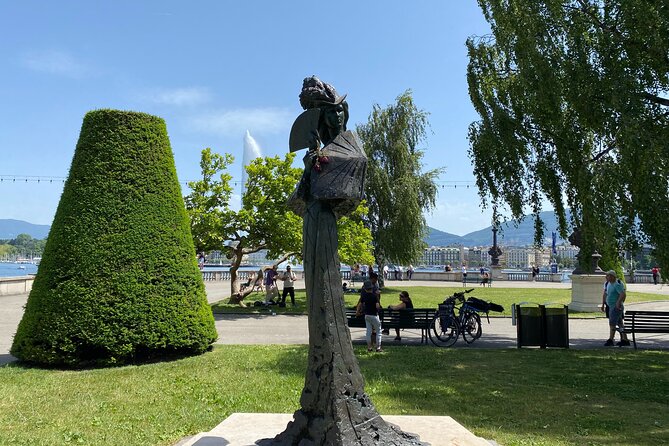
The tour begins at the statue of Empress Elisabeth of Austria, usually known as Sissi, on Quai du Mont-Blanc. This opening gives the walk an immediate human story rather than a dry orientation.
The narration explains how the empress was killed by an anarchist and focuses not only on what happened, but why. That makes this a good first stop for the tour’s larger theme of motives, anger, and moral judgment.
You should allow about 10 minutes here. The admission cost is free, as it is at every stop. Since this point is near the lakefront and public transportation, it is a practical place to begin, though you should check that your phone has loaded the first section before walking away from the meeting point.
The Jet d’Eau and the question of public good
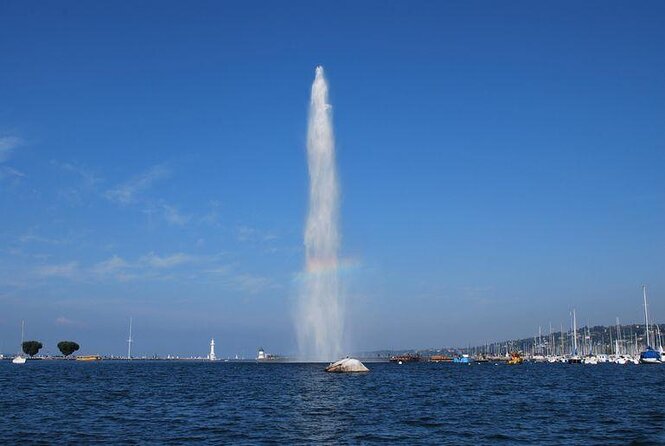
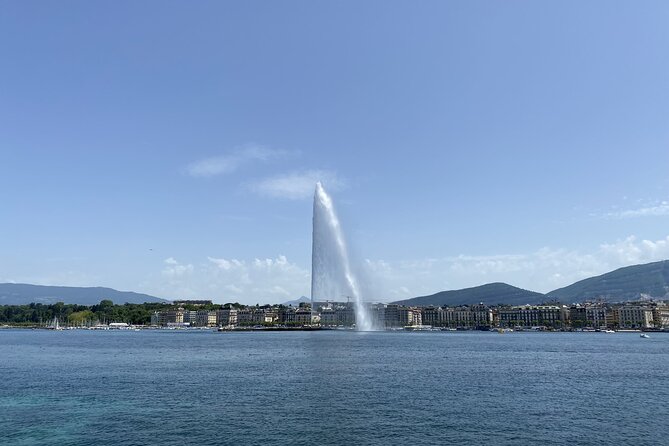
Next comes the Jet d’Eau, Geneva’s giant water fountain and one of the city’s most recognizable sights. The stop is brief, about five minutes, so expect a focused explanation rather than a long account of the fountain’s engineering or full development.
The unusual question here is how the fountain might contribute to making the world a better place. That phrasing tells you what to expect from the rest of the experience: familiar sights are treated as starting points for reflection.
This is also a good place to pause if you want photographs or a short break. The route is not a race, and the first stop already made clear that you can set your own speed.
Brunswick Monument and the meaning of generosity
The Brunswick Monument introduces a benefactor whose donation shaped Geneva. You hear why his gift mattered and learn about the images of virtues placed on the monument.
At about five minutes, this is another compact stop. The value comes less from a long architectural explanation and more from connecting a physical structure with generosity and public responsibility.
I like this kind of stop because it gives you a way to notice details you might otherwise walk past. Look at the monument as a collection of ideas, not just as an elaborate object. The audio directs your attention toward the virtues shown on it.
A few more Geneva day trips to weigh up
- Chamonix Self-guided Sightseeing Tour from Geneva
★ 4.0 · 34 reviews - Geneva Virus Run: Stop the Infection Exploration Game
★ 4.0 · 17 reviews - Unusual Audio Tour of Geneva
★ 5.0 · 8 reviews - A Self-Guided Audio Tour of Geneva’s Old Town
★ 4.5 · 7 reviews
Rousseau, confession, and uncomfortable honesty
At the statue of Jean-Jacques Rousseau, the subject turns inward. The narration considers the sins Rousseau openly confessed, giving the monument a more personal and uneasy tone.
Plan on around 10 minutes. This is one of the stops most likely to appeal to listeners who enjoy the tour’s philosophical side. It is less useful if you are looking only for a quick biography or a simple explanation of why Rousseau matters to Geneva.
The stop also helps balance the grand public monuments. Instead of speaking only about heroes and civic achievements, the route asks you to consider flaws, guilt, and self-knowledge.
National Monument and the winning design

The National Monument brings the focus back to civic identity. You learn why its design won a competition for erection, which adds a practical layer to the discussion of monuments and public memory.
This stop lasts about five minutes. It is short, but it gives the route a useful change of pace after the more personal discussion of Rousseau.
At this point, you are moving through some of Geneva’s central sights rather than being sent far out of town. That matters if you have only a short visit or want to combine the walk with your own sightseeing afterward.
The Flower Clock and the problem of pride
The Flower Clock receives a longer 10-minute treatment than you might expect from such a small landmark. Its link with pride gives the tour another chance to turn a popular photo stop into a question about how cities present themselves.
The clock is easy to treat as a quick picture and move on. The audio asks you to consider why Geneva highlights this object and what kind of civic image it creates.
This is a good example of the tour’s method. The commentary does not simply point at a sight and name it. It gives you a theme to carry as you continue walking.
Lutheran church, salvation, and the Palace of Justice
The Evangelical Lutheran Church of Geneva marks a clear shift toward religious questions. The audio compares different views on how sins and good deeds affect a person’s salvation.
You spend about five minutes at the church, then connect the nearby Palace of Justice with mercy. The pairing is thoughtful: one site raises questions about spiritual judgment, while the other relates those questions to earthly law and compassion.
You should know in advance that religion is not a minor side note here. It is part of the main structure of the experience. If theological discussion is not your interest, this section may feel slower than the monument stops.
Place Bourg-de-Four and Geneva’s justice system
Place Bourg-de-Four brings you to a monument representing a Genevan champion of justice. The commentary also recalls the area’s past red-light districts.
This 10-minute stop adds social history to the route. You are not given a polished version of the city that includes only famous names and noble ideals. You also hear about less respectable chapters and the ways urban spaces change over time.
That combination is useful. It places justice beside real human behavior rather than leaving it as an abstract virtue. You get a more complicated picture of Geneva, one that includes law, vice, public reputation, and changing neighborhoods.
St. Pierre Cathedral, Jeremiah, and public sentences
The longest stop is at St. Pierre Cathedral, with about 20 minutes planned. It also includes the statue of the Prophet Jeremiah, often called the weeping prophet, and the Town Hall building.
The cathedral is associated with temperance, adding restraint to the tour’s growing list of virtues. Jeremiah brings a mournful, personal figure into the discussion, while the Town Hall supplies a stark civic detail: a stone bench where Geneva’s judges announced death sentences.
This section offers the most layered experience on the route. You move from religious architecture to biblical sorrow and then to the hard edge of legal power.
Give yourself extra time here if you want to look carefully around the area. The audio time is an estimate, not a limit. You can pause the narration, take photographs, or continue at once if you prefer a brisk walk.
Reformation Wall and the limits of certainty
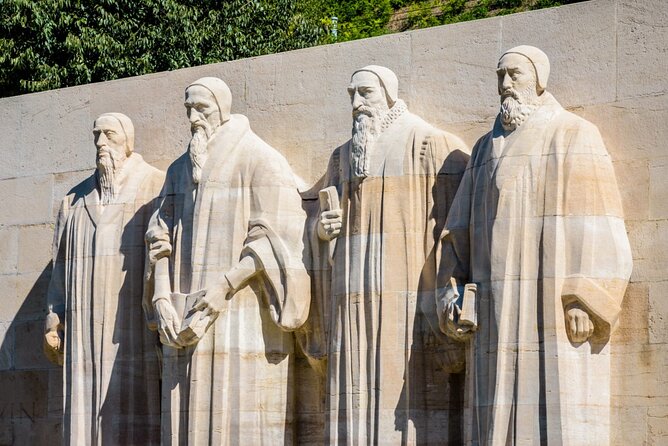
The Reformation Wall is one of the tour’s major stops and receives about 10 minutes. The audio explains which theologians were criticized for being inflexible, merciless, and heartless.
That is an interesting choice because the wall often gets reduced to a simple account of the Protestant Reformation. Here, the focus includes criticism of religious leaders and the human cost of rigid belief.
If you already know something about Geneva’s Reformation story, this framing may give you a fresh angle. If you are new to the subject, expect an interpretation rather than a full academic lecture.
Dufour, Henri Dunant, and the fight against suffering
The statue of Guillaume-Henri Dufour is a brief five-minute stop. The narration presents his struggle against evil, linking a military and civic figure with the tour’s wider concern for courage and moral action.
Then comes the 10-minute stop at the bust of Henri Dunant, one of the founders of the Red Cross. The audio explains important parts of his life and draws surprising parallels with Leo Tolstoy.
This is one of the more distinctive pairings on the route. Dunant’s name is closely tied to humanitarian work, so the stop gives the tour a chance to consider courage in practical terms, not only as a grand statue or heroic ideal.
The Escalade Fountain and the closing note of courage
The walk ends at the Escalade Fountain on Rue de la Confédération. It honors the courage of the Genevans, giving the tour a clear final theme.
The final stop lasts about five minutes. Ending here is convenient if you want to continue exploring central Geneva on foot, though no onward itinerary is included.
The route begins with a violent death and ends with civic bravery. Between those points, it moves through generosity, confession, pride, salvation, justice, temperance, religious conflict, and humanitarian work. The structure is more reflective than a typical city orientation, but it is also easy to remember.
How the self-guided format works
After booking, you receive a link rather than meeting a live guide. You need your own mobile phone, internet access, and headset.
The professional audio narration is in English. Photos and detailed directions are included, which helps with the transitions between stops. You are responsible for opening the link, keeping the phone charged, and maintaining your data connection.
The main technical weakness is the lack of an offline download. One user had slow loading, dropouts, and several full restarts in areas with weaker coverage. My practical advice is to start with a strong connection and avoid assuming that the entire route will work without data.
The private format has clear benefits. You can pause for food, shade, photos, or extra sightseeing, and you never have to keep up with a group. On the other hand, you cannot ask the narrator a follow-up question, and the commentary cannot change based on your interests.
Timing, pace, and practical value
The listed stop times total roughly two hours, although the official duration is about one to two hours. In practice, your pace will depend on how often you pause, how quickly you move between points, and how much time you spend looking at the monuments.
A hot day can make the route feel longer. Build in breaks rather than treating the timing as a strict schedule. One useful feature of a self-guided walk is that you can stop the audio and resume later.
The route is near public transportation, service animals are allowed, and most people can participate. The experience is offered in English only. Since all admissions are free, the $13.29 cost pays for the route design, directions, narration, and interpretation rather than entrance tickets.
I consider that fair value if you want structure and context. If you are comfortable finding each sight yourself and reading basic information on your phone, you may prefer to explore independently at no added cost.
Who should choose this Geneva walk?
I would suggest it to:
- First-time visitors who want an organized route through major central sights
- Independent walkers who dislike fixed departure times
- People interested in ethics, religion, justice, and human behavior
- Couples or small groups who want to stop and talk along the way
- Visitors who prefer audio narration to a live group
I would be cautious about booking it if your main goal is detailed architectural information, a chronological account of Geneva, or a live guide with local conversation. The route gives history and anecdotes, but its central lens is virtues and vices.
It is also not ideal for anyone who needs offline audio. Check your data service before setting out, and keep the booking link easy to reach.
Should you book the Many Faces of Geneva tour?
Book it if you want a flexible introduction to Geneva that connects monuments with questions about pride, mercy, courage, anger, envy, justice, and salvation. The directions are designed to be easy to follow, and the route includes major sights without forcing you into a group schedule.
Skip it if you want a purely historical walking tour or if philosophical and religious commentary sounds tiring. At $13.29, the price is reasonable for a structured private walk, but its value depends heavily on enjoying the unusual theme.
Before starting, bring a charged phone, working headphones, and dependable internet. With those basics in place, this can be a thoughtful way to get your bearings and see Geneva through more than dates and statues.
FAQ
How long does the self-guided audio tour take?
The stated duration is about one to two hours. The individual stops range from five to 20 minutes, and you can pause or adjust the pace.
What language is the audio guide offered in?
The experience is offered in English.
Is there a live guide?
No. You explore independently using a link provided after booking. The audio is recorded by professional speakers.
What do I need to bring?
You need your own mobile phone with internet access and a headset.
Can I listen without an internet connection?
No offline version is currently offered. The tour depends on a stable data connection, so weak coverage may cause slow loading or interruptions.
Where does the tour begin?
It begins at the Monument to Empress Sissi at Quai du Mont-Blanc 10, 1201 Genève, Switzerland.
Where does the tour end?
It ends at the Fontaine de l’Escalade at Rue de la Confédération 4, 1204 Genève, Switzerland.
How much does the experience cost?
The listed price is $13.29 per person. Admission tickets at the stops are free.
Can I cancel for a full refund?
Yes. You can cancel at least 24 hours before the experience start time for a full refund. Changes or cancellations made less than 24 hours before the start time are not accepted for a refund.
More Audio Tours in Geneva
- Zurich: City Bus Tour with Audio Guide and Lake Cruise
★ 4.3 · 1,195 reviews - Zurich City Tour with Audio Commentary
★ 4.0 · 372 reviews - Zurich: City Top Attractions Tour by Bus with Audio Guide
★ 4.3 · 282 reviews - Basel: Sightseeing Bus Tour with Audio Guide
★ 4.2 · 205 reviews
Just added around Geneva
- Geneva Welcome Tour: Private Tour with a Local★ 5.0 · 3 reviews
- Geneva Private Walking Tour★ 5.0 · 3 reviews
- Geneva: Highlight Tour in TukTuk★ 5.0 · 3 reviews
- Geneva: Day Trip to Chamonix, Geneva City Tour + Cruise★ 3.0 · 3 reviews
- Private Photo Tour LUXE CUSTOM in Geneva★ 4.5 · 3 reviews
- Alpine Tour Across Switzerland★ 5.0 · 3 reviews
- Geneva Crown★ 5.0 · 4 reviews
- Geneva Countryside By E-Bike With Wine Tasting★ 4.0 · 4 reviews
Geneva Tours, compared.
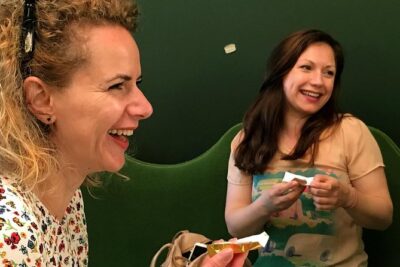
Award-Winning Geneva Chocolate &Old Town Tour with Boat Ride (3h)
Read our review →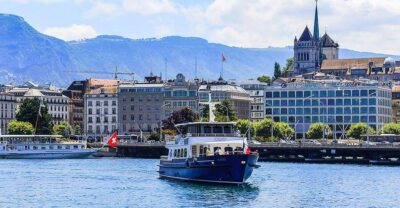
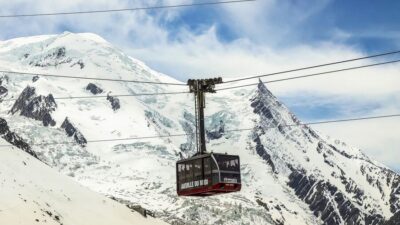
Chamonix & Mont Blanc Scenic Glass-Roof Bus Tour from Geneva
Read our review →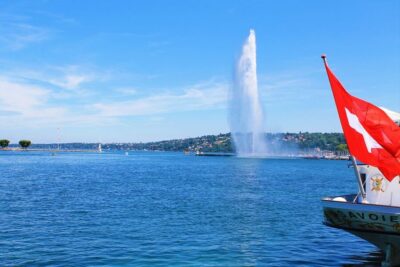
Geneva: Scenic Lake Cruise with Snacks and Wine
Read our review →
Chamonix & Mont Blanc Panoramic Sky-Glass Bus Guided Day Trip
Read our review →
From Geneva: Day Trip to Chamonix with Cable Car and Train
Read our review →
Browse the lists this tour appears in