
Reviewed · GENEVA TOURS
Geneva Private Walking Tour
Geneva’s story comes into sharp focus on foot, especially around Saint Peter’s Cathedral and the Reformation Wall. In 90 minutes, you move from the English Garden and its famous Flower Clock through medieval lanes, lakeside views, Rousseau’s intellectual legacy, and the city’s role in shaping Protestant Europe.
I like the private format, which gives your group its own guide and leaves room to adjust the focus on the spot. I also like the mix of major sights and big ideas: John Calvin, the four Genovese reformers, Jean-Jacques Rousseau, the Geneva Conventions, and the city’s place in modern diplomacy.
The main drawback is the short running time. At $368 per group of up to 15, it can be good value for a full group, but 90 minutes is not enough for a slow, detailed visit to every landmark. Entrance fees are not included, and the tour is offered in English only.
Key points to know before you book
- The meeting point is the Flower Clock: You begin in the English Garden, near Rues-Basses Longemalle.
- The tour follows Geneva’s major themes: Reformation, philosophy, diplomacy, humanitarian law, and the city’s medieval past.
- You get a private guide: Your group is not combined with strangers, and on-the-spot adjustments may be possible.
- The route includes Old Town and the lakefront: Expect Place du Bourg-de-Four, Saint Peter’s Cathedral, the Rhône, and Mont Blanc Bridge.
- The duration is only 90 minutes: It works best as an orientation walk rather than a full historical tour.
- Cold weather can affect comfort: Guide Peter adjusted the route to get out of the wind, a useful reminder to dress for Geneva’s exposed waterfront.
Starting beneath Geneva’s famous Flower Clock
Your walk begins in the English Garden, in front of Geneva’s Flower Clock. This is a practical meeting point because it is easy to recognize, and the clock gives you an immediate introduction to Geneva’s polished public spaces.
The clock is made from carefully arranged flower beds. It is not simply a timepiece with plants around it. The design changes with the seasons, so the display is part garden, part city symbol, and a pleasant first stop before you head toward the old center.
From here, your guide can set the city in context. Geneva is cosmopolitan and multicultural, with a strong international role. It is home to the Red Cross and several United Nations agencies, and it is closely linked with the Geneva Conventions, which set rules for armed conflict and protections for people affected by war.
That background helps explain why this is not just a pretty Swiss city walk. Geneva’s identity comes from the meeting of religion, political thought, humanitarian work, and international diplomacy. You are not asked to choose between postcard scenery and serious history. The tour brings both into the same 90-minute route.
More Walking Tours in Geneva
- Chocolate Flavors Walking Tour of Geneva
★ 4.9 · 670 reviews - Geneva Private Custom Walking Tour With A Guide (Private Tour)
★ 4.5 · 47 reviews - Geneva: Private Walking Tour with a Local Guide
★ 4.8 · 40 reviews
The lakefront, Rhône, and Mont Blanc Bridge
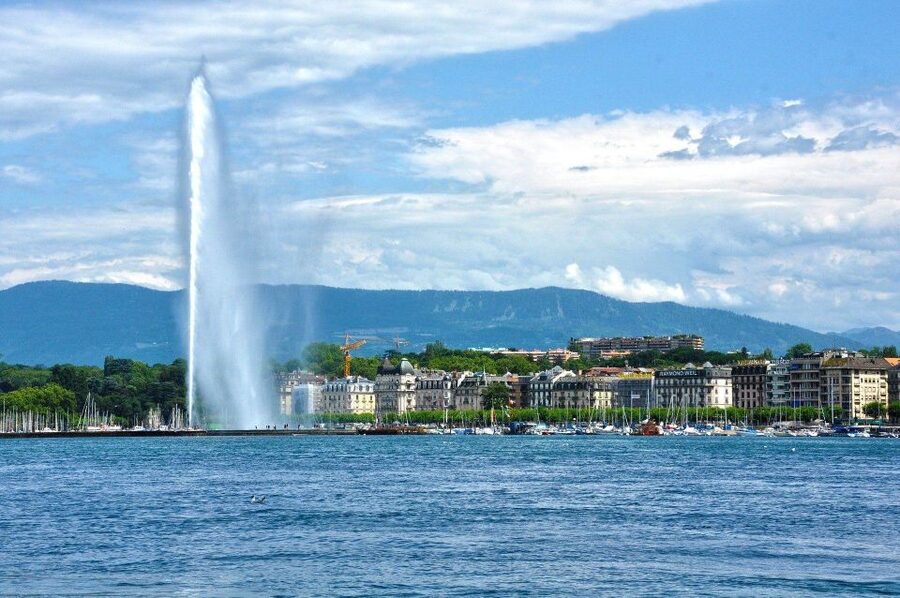
The route takes in the lakeshore and the Rhône River, two places where Geneva’s geography becomes part of the story. From the waterfront, you can get a feel for the city’s open connection to the wider world, while the Rhône shows how the city is organized around water as it leaves the lake.
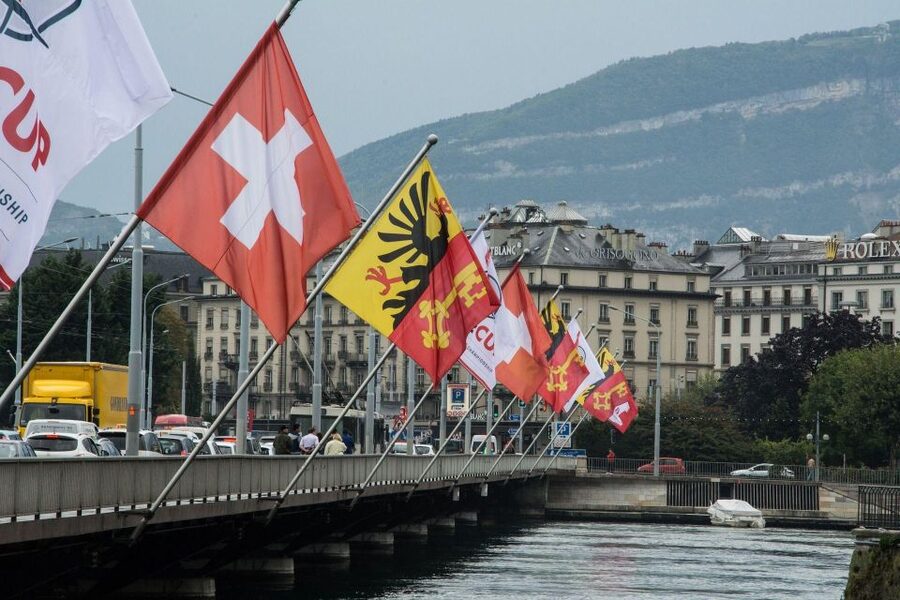
Mont Blanc Bridge is another useful orientation point. It connects the lakefront with the city’s central areas and offers a clear sense of Geneva’s position between the water and the Old Town. On a short tour, these broad views matter because they help you understand the city’s layout before you turn into its older quarters.
I would pay attention to your guide’s pacing here. The lakeshore can be exposed, and winter weather may make the open sections uncomfortable. Peter adjusted the route during a very cold outing so the group could spend more time out of the wind. You should still bring a warm layer, especially if your visit is in the colder months.
This part of the walk is also a good reason to book a private tour early in your stay. You get a quick mental map of Geneva’s central sights, which can make later independent exploring easier. After the tour, you will know how the English Garden, lakefront, Rhône, bridge, and Old Town relate to one another.
Medieval lanes and Place du Bourg-de-Four
Geneva’s Old Town changes the mood of the walk. Small medieval streets and squares replace the broad lakefront, and the architecture becomes more intimate. Cafes and older buildings line the route, giving you places to pause after the formal tour.
Place du Bourg-de-Four is one of the key Old Town stops. It is a natural gathering place and a useful window into Geneva’s long urban life. Rather than rushing through it as a photo stop, I would listen for the details that connect the square to the city’s religious and civic development.
The Old Town is compact enough to explore on foot, but its lanes can make orientation tricky at first. That is where a local guide earns the fee. You get more than directions from one landmark to the next. You get a running explanation of why the streets, squares, churches, and civic spaces matter.
Because the tour lasts only 90 minutes, expect a focused walk rather than an exhaustive tour of every lane. You will see representative areas and the most important landmarks, but you will not have time to linger at every cafe or inspect every building. I would treat this part as a useful introduction, then return later if a particular square catches your attention.
Saint Peter’s Cathedral and Calvin’s Geneva
Saint Peter’s Cathedral is one of the central stops, both for its architecture and for its place in the Reformation story. The cathedral’s history reaches back through Geneva’s religious past, while John Calvin’s work made the city a major center of Protestant reform.
The tour places special attention on Calvin’s legacy and on the quartet of Genovese reformers. The reformers’ influence is one of the main reasons Geneva became known far beyond Switzerland. Your guide can connect the buildings and public spaces you see with the religious changes that reshaped Europe.
This is where the private format can be especially useful. If your group already knows something about Calvin, you can ask for more historical context. If the subject is new to you, the guide can keep the explanation grounded in places you are actually seeing rather than giving you a long lecture detached from the street.
You should not assume that an interior visit is included. Entrance fees are excluded, and the activity description promises a look at Saint Peter’s Cathedral rather than a paid admission. If going inside is important to you, ask the guide about the possibility of customizing the route on the spot and confirm any cost before proceeding.
The cathedral also gives the tour a strong sense of place. Geneva’s Reformation story is not presented as an abstract chapter from a textbook. It happened in the streets, churches, and meeting places around you. That makes the history easier to follow, even if you arrive without much prior knowledge.
Same mountains, a completely different day out:
- Award-Winning Geneva Chocolate &Old Town Tour with Boat Ride (3h)
★ 5.0 · 3,721 reviews - Geneva: 50-Minute Lake Geneva Cruise
★ 4.3 · 3,183 reviews - Chamonix & Mont Blanc Scenic Glass-Roof Bus Tour from Geneva
★ 4.5 · 1,587 reviews - Geneva: Scenic Lake Cruise with Snacks and Wine
★ 4.4 · 1,503 reviews
Rousseau’s ideas in a city built on debate
The tour also explores Rousseau’s philosophical influence. Jean-Jacques Rousseau was born in Geneva, and his ideas about society, politics, education, and individual freedom reached far beyond the city.
The value of this stop is the contrast it creates with the Reformation material. Calvin’s Geneva points you toward religion, discipline, and institutional change. Rousseau’s legacy brings in questions about human nature, government, education, and personal liberty. In a short walk, you get a sense of Geneva as a place shaped by argument as much as by architecture.
You may not receive a full study of Rousseau in 90 minutes, and that is not the purpose. Instead, the tour places his influence within the city’s wider intellectual story. If you enjoy political thought or European history, this section may be one of the most rewarding parts of the walk.
I would ask your guide to explain how Rousseau fits alongside Calvin and the city’s modern international role. That question can help link the different periods together. The tour works best when you use its private setting to ask for those connections instead of simply moving from sight to sight.
The Reformation Wall and Geneva’s religious legacy
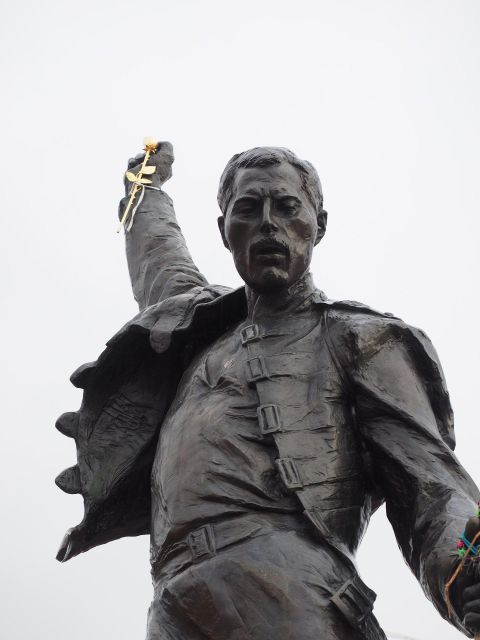
The Reformation Wall Monument gives the tour a clear visual ending to its religious theme. It commemorates the major figures and events connected with the Protestant Reformation and gives you a place to see Geneva’s role presented in monumental form.
The wall matters because it shows how Geneva remembers its past. This is not only a monument to individual reformers. It reflects the city’s claim to a major role in a movement that altered churches, governments, education, and political life across Europe.
Your guide’s explanation is important here. A row of carved figures and inscriptions can be hard to understand without context, especially if you do not already know the names and events involved. The tour’s focus on Calvin and the four Genovese reformers gives you a framework for reading the monument rather than treating it as another quick photograph.
The Reformation Wall also completes the tour’s movement through Geneva. You begin with a modern city garden and its famous flower display, pass through the lakefront and international city center, then enter the older streets and finish with the religious forces that helped define Geneva. That is a sensible structure for a short orientation walk.
What the private format really adds
This is a private tour for your group only, with a maximum of 15 people. That matters most if you want to ask questions, set the pace, or request a little more attention to one subject.
Possible customization is available with the local guide on the spot. The wording is broad, so I would not assume every requested change can be made, especially within 90 minutes. Still, it gives you more flexibility than a fixed group walk. You might ask for extra attention to the Reformation, Rousseau, diplomacy, architecture, or the practical layout of the Old Town.
The individual guides named in the booking feedback include Livia and Olga. Livia was praised for balancing historical facts with other interesting details, while Olga was described as organized about the meeting time and location and strong at explaining Geneva’s past. Those comments suggest that clear organization and history-focused guiding are central strengths of the service, though you should not assume which guide will lead your tour.
The private setting also helps with weather. Peter adapted the route during a very cold tour, taking the group toward places with less wind. That does not remove the need for suitable clothing, but it shows why a flexible guide can be useful on a walking tour.
Is $368 good value for 90 minutes?
The price is $368 per group of up to 15 people. For one or two people, that is a steep price for a 90-minute walk. For a larger family or group of friends, the cost per person drops sharply, making the private format easier to justify.
At a full group of 15, the price works out to about $25 per person. At six people, it is roughly $61 per person, and at two people it is $184 each. Those figures help you judge the tour more realistically than the group price alone.
What you are paying for is not a long list of admissions or transport. You are paying for a private English-speaking guide, a route through several central Geneva areas, and the ability to ask questions without sharing the guide with another group. Since entrance fees are not included, budget separately if you plan to visit any paid site.
I see the best value for families, small groups, and visitors who want a fast introduction on their first day. If you are a solo visitor focused on saving money, an independent walk may be more economical. If you want a personal explanation of Geneva’s history and have others to share the cost with, the price becomes more reasonable.
How to make the most of the 90 minutes
Meet in front of the Flower Clock, not simply somewhere in the English Garden. Olga’s careful attention to meeting time and location is a useful reminder that clear arrival plans matter in a busy city center.
Wear comfortable shoes. The route includes Old Town streets, public squares, the lakeshore, and the area around the Rhône. You are not hiking, but you are walking across different surfaces and moving between open waterfront and enclosed medieval lanes.
If it is cold, bring clothing that protects you from wind. Peter’s route adjustment shows that waterfront weather can affect the walk. The guide may be able to make small changes, but the tour remains outdoors and lasts 90 minutes.
Think about your main interest before you arrive. You can ask for more attention to:
- John Calvin and the Reformation
- The four Genovese reformers
- Rousseau and political philosophy
- Saint Peter’s Cathedral
- The Geneva Conventions and humanitarian work
- Geneva’s modern diplomatic role
The guide can possibly customize the tour on the spot, but the time is limited. Picking one or two priorities will give you a better chance of getting the depth you want.
Who will enjoy this Geneva walk?
I would recommend it most to first-time visitors who want a clear introduction to central Geneva without committing to a half-day tour. It suits families and groups that prefer a private guide, especially when several people can share the $368 cost.
History-minded visitors will find plenty to work with. The tour connects the Reformation, Calvin, the Genovese reformers, Rousseau, the cathedral, and the Reformation Wall. People interested in international affairs will also appreciate the explanation of Geneva’s role as a center for diplomacy, the Red Cross, United Nations agencies, and humanitarian law.
It may be less suitable if you want long interior visits, museum time, or a slow photography walk. The duration is fixed at 90 minutes, entrance fees are separate, and the tour is available in English only.
You can cancel up to 24 hours ahead for a full refund, and you can reserve now while paying later. Those policies are useful if your Geneva plans may change, but the main decision remains the route and price: this is a focused private orientation, not a full-day sightseeing program.
Should you book the Geneva Private Walking Tour?
Book it if you want a private, history-led introduction to Geneva and can share the group price with several people. The strongest reasons are the clear route through the Flower Clock, lakefront, Rhône, Old Town, cathedral, and Reformation Wall, plus the chance to ask a guide about Calvin, Rousseau, and Geneva’s international role.
I would choose it early in a Geneva visit. You will get the city’s basic shape, then you can return to the places that interest you most. If you are visiting alone, watching your budget, or hoping to spend time inside major sights, skip this private walk and explore independently instead.
FAQ
Where does the Geneva Private Walking Tour meet?
The meeting point is in front of the Flower Clock in the English Garden Park, at Rues-Basses Longemalle, 1204 Geneva, Switzerland.
How long does the walking tour last?
The tour lasts 90 minutes.
Is the tour private?
Yes. It is a private group tour with a local professional guide, for up to 15 people.
What language is the tour offered in?
The available tour language is English.
Are entrance fees included?
No. Entrance fees are not included in the price.
Can I cancel the tour for a refund?
Yes. You can cancel up to 24 hours in advance for a full refund. You can also reserve now and pay later.
Just added around Geneva
- Geneva Welcome Tour: Private Tour with a Local★ 5.0 · 3 reviews
- Geneva: Highlight Tour in TukTuk★ 5.0 · 3 reviews
- Geneva: Day Trip to Chamonix, Geneva City Tour + Cruise★ 3.0 · 3 reviews
- Private Photo Tour LUXE CUSTOM in Geneva★ 4.5 · 3 reviews
- Alpine Tour Across Switzerland★ 5.0 · 3 reviews
- Geneva Crown★ 5.0 · 4 reviews
- Geneva Countryside By E-Bike With Wine Tasting★ 4.0 · 4 reviews
- Geneva to Gruyère Private Day Trip. Cheese & Chocolate Tour★ 4.0 · 4 reviews
Geneva Tours, compared.
Award-Winning Geneva Chocolate &Old Town Tour with Boat Ride (3h)
Read our review →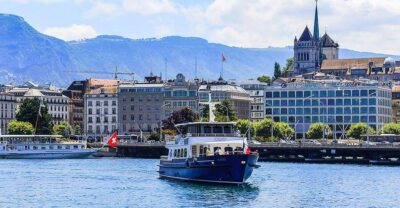
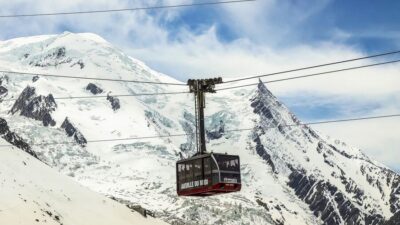
Chamonix & Mont Blanc Scenic Glass-Roof Bus Tour from Geneva
Read our review →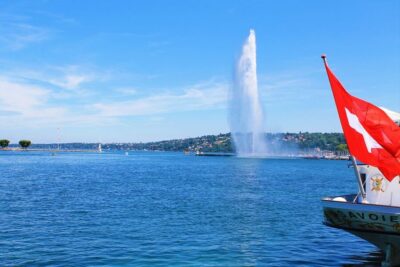
Geneva: Scenic Lake Cruise with Snacks and Wine
Read our review →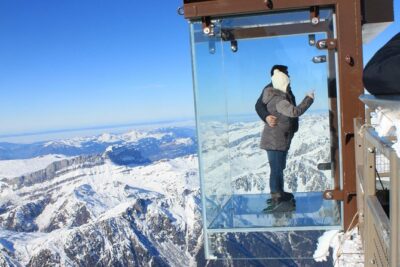
Chamonix & Mont Blanc Panoramic Sky-Glass Bus Guided Day Trip
Read our review →
From Geneva: Day Trip to Chamonix with Cable Car and Train
Read our review →
Browse the lists this tour appears in