Reviewed · ZURICH TOURS
Zurich: Exclusive Swiss Banking Tour with a Local
Zurich’s banking district is more than polished storefronts and discreet office doors. On this 1.5-hour private walking tour, you follow the city’s financial story from Bahnhofstrasse to Paradeplatz, with a local guide explaining how Switzerland became a banking power and where old banks have given way to luxury shops.
I like two things here. First, the tour links banking, politics, and Switzerland’s international role, so you get more than a parade of grand buildings. Second, the small group, capped at eight people, lets the guide adjust the pace and focus to your interests. The main drawback is clear: you stay outside. You will not enter a vault, see a working bank interior, or handle museum displays, so the $258 price can feel high if you want a hands-on experience.
Key points at a glance
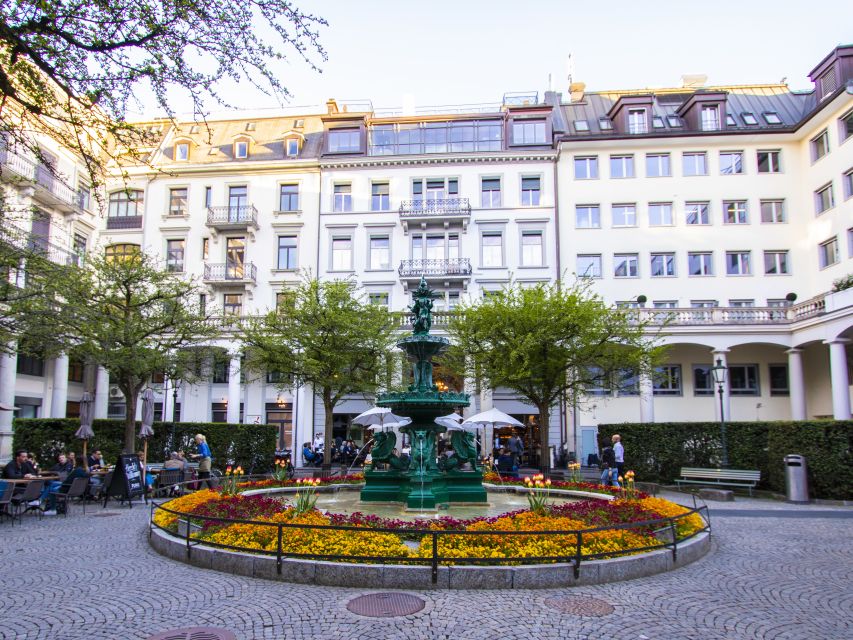
- Paradeplatz and Bahnhofstrasse: Walk through Zurich’s best-known financial addresses and see how banking shaped the city center.
- Former banks turned boutiques: Learn which high-end shops occupy spaces once used by prestigious banks.
- Local stories and anecdotes: Hear about the professional lives of Swiss bankers, including where they dine, drink, and make deals.
- Small-group format: Up to eight people can join, with private options available and an itinerary that adjusts to walking pace and interests.
- Early morning or evening timing: The schedule gives you a glimpse of banking life at the start or end of the workday.
- A conversation-led tour: The experience depends on the guide’s explanations, so expectations matter more here than on a ticketed attraction.
Bahnhofstrasse sets the scene for Zurich’s money story
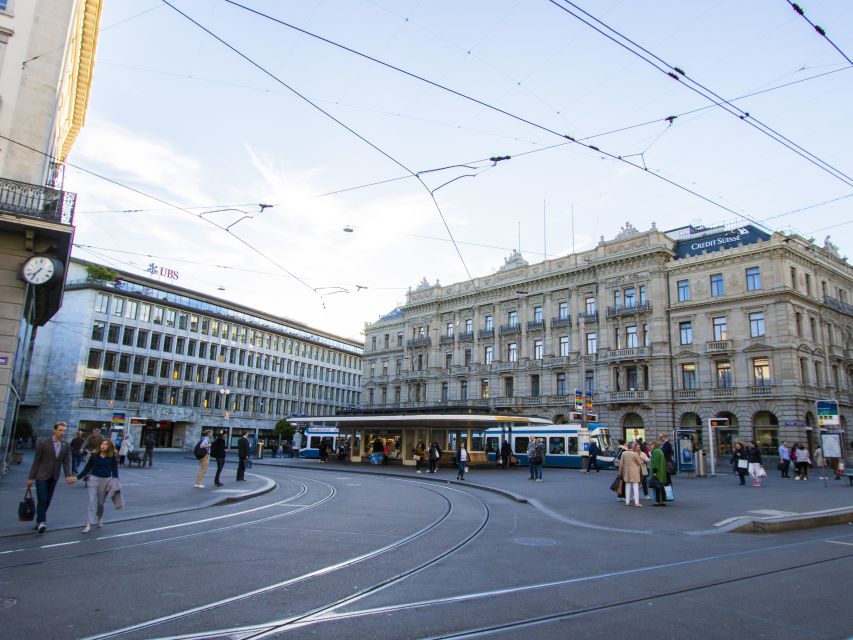
The meeting point is directly in front of Credit Suisse, placing you in the middle of Zurich’s financial quarter from the first minute. That is a useful starting point because Bahnhofstrasse is not simply a shopping street. Its grand addresses and polished façades help explain how commerce, private wealth, and city life grew together.
Your guide introduces the way Swiss banking developed and explains why Zurich became such an important financial center. The tour is built around walking and conversation, not a formal lecture, so you can ask questions as the route unfolds.
Bahnhofstrasse also gives the experience its first useful contrast. Today, you may see expensive boutiques and immaculate shop windows. Behind some of those modern businesses are buildings with an older financial purpose. The guide points out which locations once housed prestigious banks, giving you a better reason to look up from the displays.
I like this part because it makes Zurich’s banking past visible without requiring a special museum visit. The limitation is that the information depends on what the guide can show from the street. If you want architectural detail, interior access, or old documents, this walk may leave you wanting more.
A few more Zurich day trips to weigh up
- Lindt Home of Chocolate Museum Entry Ticket
★ 4.7 · 9,329 reviews - Zurich: Day Trip to Grindelwald, Interlaken & Lauterbrunnen
★ 4.5 · 4,699 reviews - Zurich: City Tour, Cruise, and Lindt Home of Chocolate Visit
★ 4.5 · 4,624 reviews
Paradeplatz explains the center of Swiss finance
Paradeplatz is the key stop for understanding Zurich’s banking identity. It is one of the city’s most recognizable financial addresses, and the tour uses it to explain how banking, public life, and international business became connected.
Here, the guide can place Swiss banks in a wider setting. The supplied tour information specifically points to links between the Swiss banking center, politics, and Switzerland’s international role. That context is valuable because banking is not just about offices and money. It has shaped how the country presents itself, how Zurich developed, and how the city became associated with discretion and financial power.
You should expect stories and interpretation rather than a visit inside a bank. The description promises secret banking spots and places tied to bankers’ professional and social lives, but it does not promise entry to secure buildings. Do not book this expecting to see a vault or a private banking floor.
The best way to approach Paradeplatz is to listen for the connections between places. A building can look like a grand commercial address, while the guide explains how it fits into the old banking network. That shift in viewpoint is the real point of the stop.
Former banks now wear luxury-shop signs
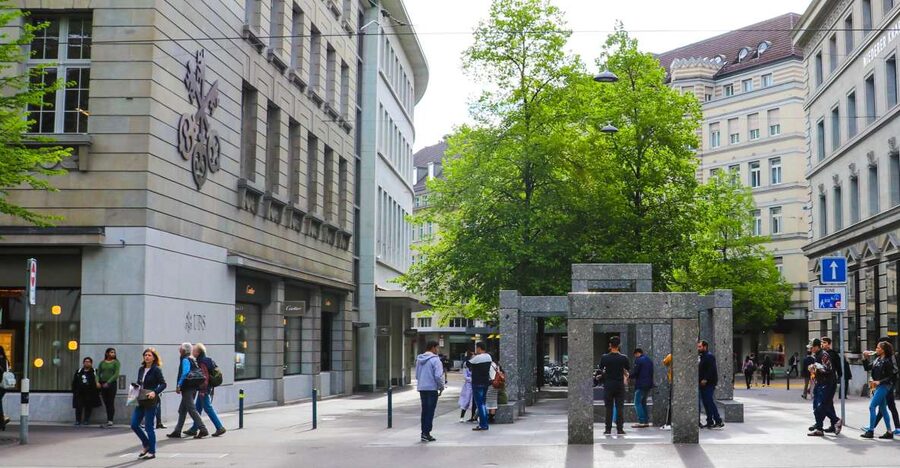
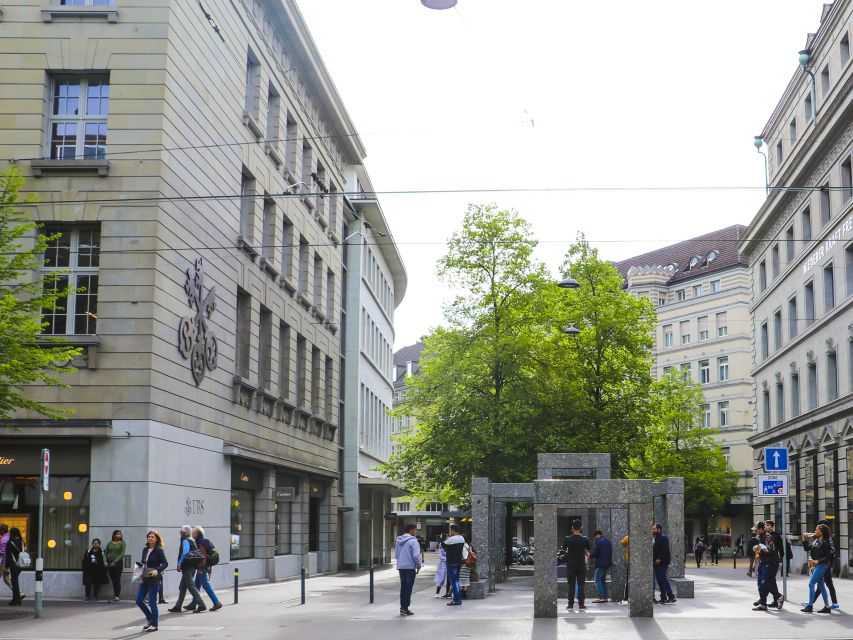
One of the more interesting details is the change in use along Zurich’s main shopping streets. Some current high-end boutiques occupy premises that once belonged to prestigious banks. The guide identifies these locations and explains how the banking quarter has changed.
This is a good detail for anyone who likes cities with visible layers. You do not need an interest in finance to appreciate the contrast between discreet banking offices of the past and luxury retail today. The walk lets you read the street in a different way, noticing entrances, façades, and addresses that might otherwise blend into an expensive shopping district.
Still, this is a street-level experience. You may see the exterior of a former bank, but there is no stated access to its former rooms. One past participant specifically wanted the tour to take place while banks were open, with the chance to enter and see something like a vault. That is not part of the advertised experience.
If you are happiest with a guide pointing out details and filling in the background, this stop should work well. If you need original interiors, historic photographs, or objects behind glass, you should set your expectations lower.
Where Swiss bankers dine, drink, and make deals
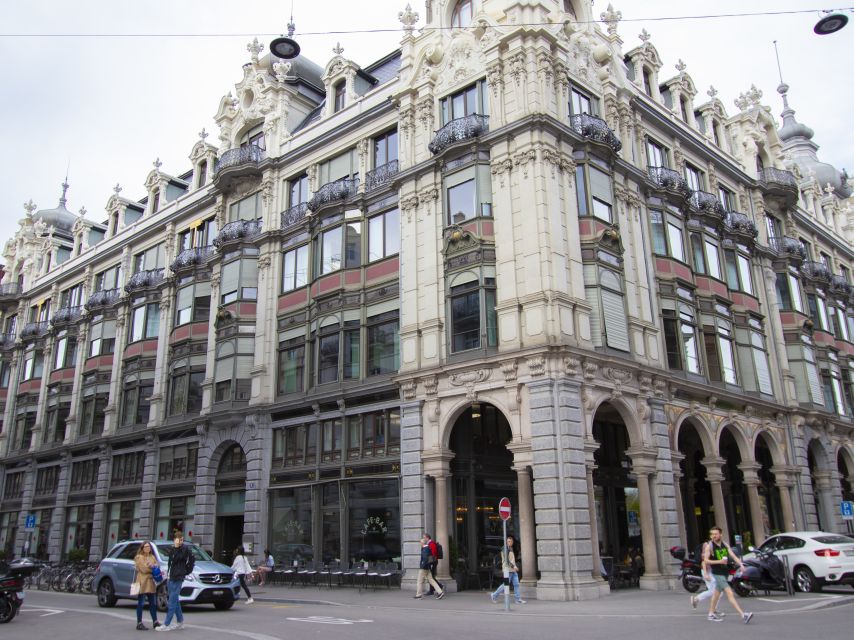
The tour adds a social side to banking by showing places where Swiss bankers have dined, had drinks, and conducted business. This helps move the subject away from dry institutional history. Financial centers are built not only in boardrooms, but also through personal connections and informal meetings.
The wording is broad, so you should expect the guide to indicate relevant places and explain their role rather than arrange a meal or drink. Food and beverages are not included, and personal expenses are your responsibility.
This part may be especially useful if you enjoy urban stories about how a profession fits into daily life. You get a sense of the banking quarter as a working district, not just a row of bank names. The route may also give you ideas for where to pause later, though the tour itself is not a restaurant or bar crawl.
The quality of this section will depend heavily on the guide. One guide was praised for being friendly and for sharing details and anecdotes. Another assessment found the content too general and the guide unprofessional. That wide range is worth keeping in mind because this is a personality-led experience.
Same mountains, a completely different day out:
- From Zurich: Bus Day Trip to Heidiland and Liechtenstein
★ 4.5 · 2,531 reviews - Zurich: City Highlights Tour by Bus, Cable Car, and Ferry
★ 4.4 · 2,366 reviews - Mount Titlis and Lucerne Day Trip from Zurich
★ 4.5 · 1,960 reviews - From Zurich: Stein am Rhein and Rhine Falls
★ 4.6 · 1,868 reviews
A guide-led history of Swiss banking
The central question is simple: how and why did Switzerland become a world banking power? The guide addresses that question while walking through Zurich and ties the answer to the buildings and streets around you.
You can expect discussion of the evolution of Zurich’s banking scene, along with stories about Switzerland’s wider financial and political role. The information is aimed at people with an interest in the financial world, but you do not need to be a banking specialist. The walk is designed to make the subject accessible through places and anecdotes.
I would treat the tour as an introduction rather than a full course in banking history. One assessment praised the information about Swiss banks, political connections, and Switzerland’s international role. Another found little beyond material that could be read online and felt the tour was not informative enough for the price.
That difference points to the main question you should ask yourself. Are you paying for a live local conversation in the streets of Zurich, or are you expecting rare facts and access unavailable elsewhere? If the first answer appeals to you, the tour has a clear purpose. If you want exclusive documents and technical financial detail, it may not deliver enough.
Early morning or evening changes the mood
The experience is offered in the early morning or evening. This timing is meant to give you a glimpse into professional banking life at the start or close of the working day.
Morning timing may suit you if you want to see the district before a busy day of sightseeing. Evening timing can make the financial quarter feel less like a business address and more like part of Zurich’s after-work social world. The exact starting time depends on availability, so check before booking.
There is also a practical tradeoff. Some buildings and businesses may be closed outside normal working hours, and the tour does not include entry to banks. The morning or evening schedule is useful for atmosphere and flexibility, but it is not a way to guarantee access to working interiors.
Weather can also change the route. Stops may vary in poor conditions, so wear comfortable shoes and clothing suited to the forecast. The tour is on foot, and the operator says it is not suitable for people with mobility impairments.
Small groups make the storytelling more useful
You join a private or small group of up to eight people. This is one of the strongest features of the format. A group of eight is still large enough to feel social, but small enough for questions and a more personal pace.
The itinerary adapts to your interests and walking speed. If you want more context about Zurich’s banking past, you can guide the conversation in that direction. If you are new to the subject, you can ask for basic explanations rather than being left behind by specialist terms.
Private booking gives you more control, although the supplied details do not specify how the price changes between a private tour and a shared small group. Ask before committing if the type of group matters to you.
The flexibility also has a limit. An adaptable route can mean that two departures do not cover exactly the same stops. Weather may alter the itinerary as well. That is normal for a local walking experience, but it means you should not treat the route as a fixed museum-style program.
What $258 means in practical terms
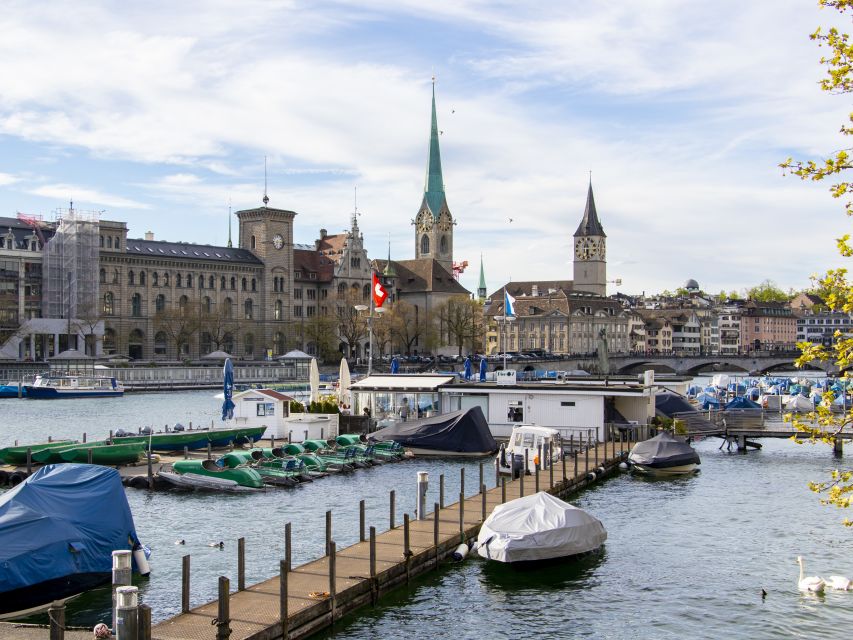
At $258 per person, this is an expensive 90-minute walk. The price works best for someone who places real value on a private or very small-group guide and has a strong interest in Swiss banking.
The fee is easier to justify if you are traveling with a small party, want to ask questions freely, and prefer a tailored introduction to Zurich. You are paying for the guide’s time, local interpretation, and a focused route through the banking district. You are not paying for food, drinks, transport, museum entry, monument tickets, or access to a vault.
The value is weaker if you simply want to see Bahnhofstrasse and Paradeplatz. You can walk through those public areas without booking a tour. The added value comes from the explanations, the former bank locations, the social details, and the connections between finance and Swiss public life.
The mixed assessment of the experience makes the price especially important. Some people found the guide pleasant and the banking context interesting. Others felt the material was too easy to find online and that the tour did not justify its cost. One useful criticism was the lack of strong visual material. Old, faded photocopies were considered disappointing, so do not count on a polished display of archival images.
Who should book this Zurich banking walk?
I would recommend it most strongly to three kinds of people:
- You have a genuine interest in Swiss banks, financial history, or Zurich’s international role.
- You prefer a local guide and conversation over a large group with a fixed script.
- You want to connect famous streets and addresses with the city’s working life.
It may also suit a repeat visitor who has already seen Zurich’s main sights and wants a narrower theme. The walk gives familiar streets a new focus and may help you notice details you would otherwise pass.
I would be cautious if you need a deep academic treatment, visual exhibits, or interior access. The tour does not include museums, monuments, transportation, or bank entry. It is also a poor fit if walking is difficult.
The language choice is English or German. That makes it practical for many visitors, but no other languages are listed. The meeting point is easy to identify, directly in front of Credit Suisse, and the total time is short enough to fit around other Zurich plans.
My verdict on this 1.5-hour experience
Book this tour if the idea of following Zurich’s financial story with a local guide genuinely interests you. The strongest parts are the links between banking, politics, and Swiss international life, plus the small-group setting and the discovery that some luxury shops occupy former bank premises.
Skip it if you mainly want to enter a bank, see a vault, examine original historic material, or receive a detailed lesson that goes well beyond public information. At $258 per person, the tour needs to feel personal and well led to earn its keep. For the right audience, it is a compact, thoughtful way to read Zurich’s center through money and power. For everyone else, a self-guided walk through Bahnhofstrasse and Paradeplatz may offer better value.
FAQ
Where does the Zurich banking tour meet?
The meeting point is directly in front of Credit Suisse in Zurich.
How long does the tour last?
The walking experience lasts 1.5 hours.
What languages are available?
The live guide is available in English or German.
How many people can join?
You can join a private experience or a small group of up to eight people.
Does the tour enter banks or show a vault?
No bank interior or vault access is included in the stated experience. The tour focuses on walking through the banking district and hearing stories about its history and locations.
Are food, drinks, transportation, or entry tickets included?
No. Personal expenses, food and drinks, transportation tickets, museum entry, and monument tickets are excluded.
Is the tour suitable for people with mobility impairments?
The experience is listed as unsuitable for people with mobility impairments because it is a walking tour.
Can I cancel the booking?
You can cancel up to 24 hours in advance for a full refund. A reserve-now-and-pay-later option is also available.
Just added around Zurich
- 2 Hour Floating Harmony Couples Course★ 5.0 · 3 reviews
- From Zurich: 7-Day Tour to Geneva with Tickets and Lodging★ 5.0 · 3 reviews
- Lake Zurich boat tour for an afternoon !★ 5.0 · 3 reviews
- Zurich: Private tour to Interlaken, Grindelwald & Jungfrau★ 5.0 · 3 reviews
- Lake Zurich mini boat tour / by night!★ 5.0 · 3 reviews
- Zurich Premium Fitness Pass★ 3.0 · 3 reviews
- Central Switzerland (Private Tour)★ 5.0 · 3 reviews
- Wakeboarding Lake Zurich – afternoon !★ 5.0 · 3 reviews
Zurich Tours, compared.


Zurich: Day Trip to Grindelwald, Interlaken & Lauterbrunnen
Read our review →
Zurich: City Tour, Cruise, and Lindt Home of Chocolate Visit
Read our review →
From Zurich: Bus Day Trip to Heidiland and Liechtenstein
Read our review →
Zurich: City Highlights Tour by Bus, Cable Car, and Ferry
Read our review →
Mount Titlis and Lucerne Day Trip from Zurich
Read our review →