
Reviewed · LUCERNE TOURS
Private Classic Lucerne City Walk
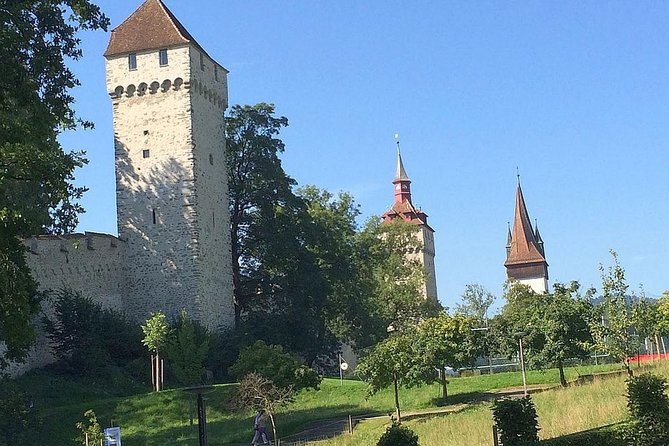
The best part of this private Lucerne walk may be the climb up the Musegg Wall. You pass through medieval defenses, climb a clock tower, and look across the rooftops toward the Alps and the Reuss River. One guide even timed the ascent so the tower bell rang as the group climbed.
I like the hotel pickup, which saves you from hunting for a meeting point, and the private format, which lets your guide adjust the pace. The tour also packs in Lucerne’s major sights, from the Lion Monument to Chapel Bridge, while adding details you could easily miss alone. The main caution is that two important interiors close at certain times of year or on certain days.
Key points to know before booking
- Musegg Tower climb: Walk the old defensive wall and climb Schirmer Tower and the Clock Tower when open.
- Hotel pickup included: Meet your guide in a Lucerne city hotel lobby, or at the large arch by the main station.
- Private two-hour route: Only your group takes part, with the pace adjusted for families, older walkers, or tight schedules.
- Ritter Palace access varies: The palace interior is closed on Saturdays, Sundays, holidays, and during special events.
- Winter changes the route: From November through March, the Musegg Wall and Towers can be viewed only from outside.
- Useful local advice: Guides such as Ralf or Ralph have offered restaurant, chocolate, shopping, and museum suggestions after the walk.
Starting at your hotel and getting your bearings
Your guide meets you in the lobby of your Lucerne hotel within the city limits. This is a small but useful perk. Lucerne’s Old Town is compact, yet a private pickup means you do not need to figure out a new meeting point after a long train ride or a busy morning.
You begin with a short introduction and a look at the route on a city map. Depending on your hotel, you either walk or take a public bus to the Lion Square area. If you are staying in a Lucerne hotel, your Visitor Card gives you free public transportation during your stay. Bring it with you. If your hotel falls outside that arrangement, a transport ticket may cost extra.
The experience lasts about two hours, though one group’s walk ran just over that mark. The listed stop times add up to roughly 80 minutes, leaving the rest for walking, questions, the uphill stretch, and transitions between sights. That makes the schedule brisk but realistic.
This is not a museum-heavy tour. It is a city walk with short explanations at many stops. You get enough context to understand Lucerne, then keep moving before the history turns into a lecture.
More Walking Tours in Lucerne
- Lucerne: Private Walking Tour with a Local Guide
★ 4.6 · 450 reviews - Lucerne Walking & Boat Tour: The Best Swiss Experience
★ 4.5 · 417 reviews - Lucerne: Guided Walking Tour with an Official Guide
★ 4.7 · 321 reviews
Bourbaki Panorama and the story behind the Lion Monument
The first stop is the Bourbaki Panorama, seen from outside. Your guide gives a short explanation of the museum and its story, but you do not enter as part of this tour. If the building interests you, ask your guide for advice about returning later.
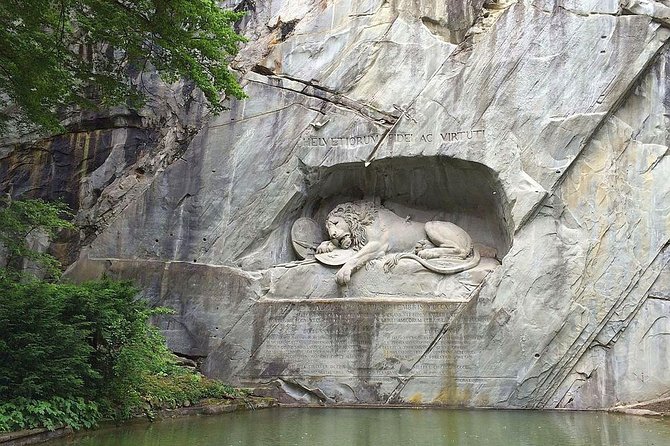
A few steps away, the Lion Monument provides one of the walk’s strongest historical moments. The carved lion commemorates Swiss Guards killed during the French Revolution. Your guide explains how Swiss soldiers served rulers across Europe, much as the Swiss Guard still serves the pope.
The connection between Switzerland and foreign military service is easy to miss if you simply arrive, take a photo, and leave. Here, the monument becomes part of a larger story about European power, the old order, and the violence that followed the French Revolution.
The stop itself lasts only about five minutes. That is enough for an explanation and photographs, but not for a long pause. If you want extra time at the monument, tell your guide early. A private tour gives you more control than a fixed group outing.
Climbing the Musegg Wall and Clock Tower
From the Lion Monument, you walk uphill for about ten minutes to the Musegg hill. This is the most physically demanding part of the route, though the walk is described as leisurely. You then visit two parts of the old fortification, climb Schirmer Tower, walk along the defensive path, and climb to the top of the Clock Tower.
The Musegg Wall dates from the early 15th century. Its stonework and elevated path give you a clear sense of Lucerne as a defended medieval town, rather than just a postcard city of bridges and lake views.
The view is the reward. From the wall and tower, you can see the city, the Alps, and the surrounding midlands. Several people especially valued this part of the tour, along with the chance to see Lucerne from above. The climb also adds variety to a route that otherwise moves through streets and squares.
There are two firm limits to know. The wall and towers are closed from November through March, so you can see them from outside only during winter. Also, tower access involves climbing, making this section less suitable for anyone who has trouble with stairs or steep paths.
Ask about timing if the clock tower matters to you. One guide arranged the ascent to coincide with the hourly bell. That sort of small adjustment is one of the clearest benefits of booking a private walk.
Hirschenplatz and Lucerne’s painted facades
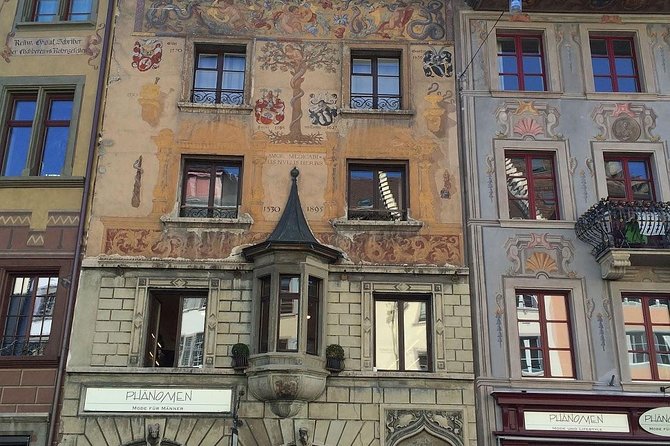
After the hill, the route heads into the Old Town and reaches Hirschenplatz, or Stag Square. Here you see medieval houses decorated with painted facades.
This is a good place to slow down for a moment and look up. Lucerne’s old streets can seem simple at first glance, but the painted fronts carry much of the town’s visual character. Your guide can point out details you might pass without noticing.
The stop takes about five minutes, so it is more of an introduction than a full architectural study. Still, it helps you read the Old Town as you continue through the next squares.
Same mountains, a completely different day out:
- From Zurich: Mount Titlis and Lucerne Day Tour
★ 4.7 · 3,381 reviews - Lucerne: Mt. Pilatus Cable Car, Cogwheel Train & Lake Cruise
★ 4.7 · 2,338 reviews - Lucerne: 1-Hour Cruise on Panoramic Yacht
★ 4.6 · 1,514 reviews - Mount Pilatus Summit from Lucerne With Lake Cruise
★ 4.5 · 1,260 reviews
Kornmarkt, the Town Hall, and spring water
At Kornmarkt, your guide explains the Town Hall and its tower, dating from the early 17th century. You also hear about the unusual clock, which does not have a minute hand.
A short walk brings you to Weinmarkt, once known as the Fish Market. This change in name offers a small window into how the square’s role shifted over time. You also learn why Lucerne’s old fountains are known for their spring water and get to taste water from the city’s oldest fountain.
That fountain stop is simple, but I like it because it turns local history into something practical. You are not only hearing about the city’s water supply. You are trying it.
The Old Town section is where the guide’s storytelling matters most. A good guide can connect the buildings, names, trades, fountains, and public spaces instead of treating each square as an isolated photo stop. The route gives you that chance without asking you to spend hours indoors.
Crossing the Reuss at Reussbrücke
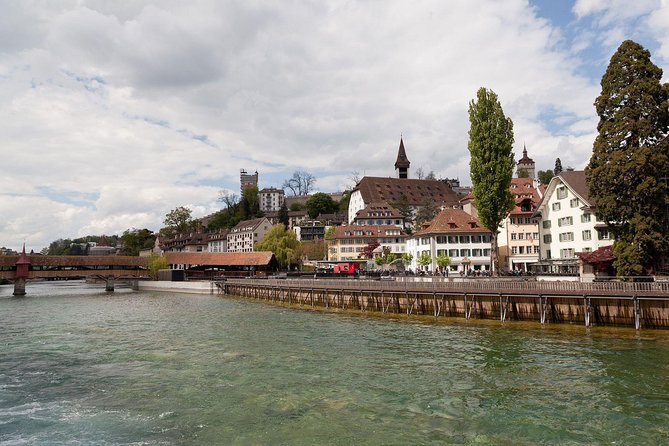
The walk continues through the lower Wine Market and across the Reuss Bridge. The route opens up here, with views of the Reuss River, the needle dam, Spreuer Bridge, and two of the Musegg Towers.
This is one of the better spots for orientation. You can look back toward the fortifications, see how the river cuts through the city, and understand why Lucerne’s bridges were so important. The needle dam still controls the river level, while the nearby bridges show different chapters of the city’s development.
The stop lasts about five minutes. You will have time for a quick explanation and photographs, but not a long riverside break. If you want lunch beside the river afterward, ask your guide for a recommendation. A guide has suggested riverside dining and local restaurants to groups at the end of the walk.
Entering Ritter Palace and viewing the Danse Macabre
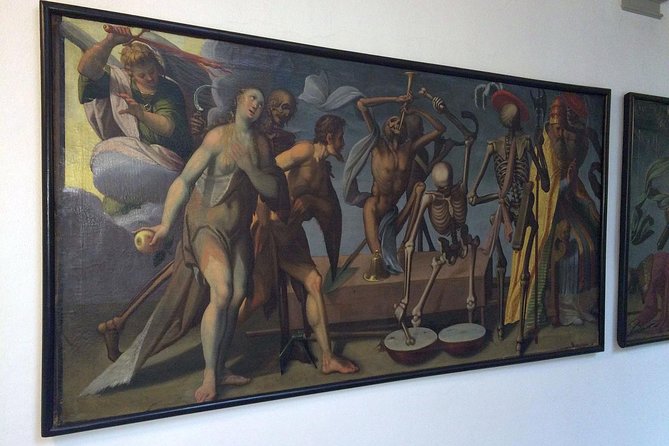
Ritter Palace, or Ritterscher Palast, is the tour’s key interior visit when open. This Florentine-style palace dates from the 16th century, and the visit includes the Danse Macabre gallery, a series of seven paintings by Jakob von Wyl.
The gallery gives the tour a different mood. After defensive walls, public squares, and bridges, you enter a formal building and examine a work centered on death. The guide’s explanation of the Danse Macabre has been a highlight for several groups, so this is a stop where interpretation adds real value.
Do not assume the palace interior will be available on every date. It is closed on Saturdays, Sundays, holidays, and during special events, when you can view it only from outside. If this stop matters to you, choose a weekday and confirm the date when booking.
The itinerary lists no separate admission charge, and the experience includes the prearranged visit when the palace is open. The benefit is less about saving a large ticket fee and more about avoiding uncertainty at a site with restricted opening days.
Jesuit Church and Chapel Bridge
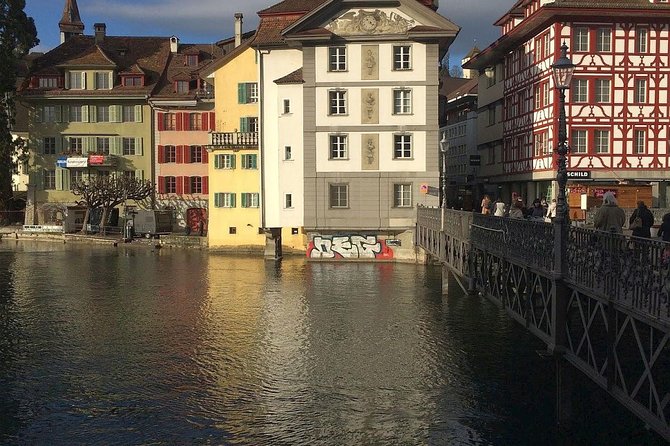
The Jesuit Church dates from the 17th century and is described as Switzerland’s first Baroque church. Your guide explains its place in Lucerne before giving you the chance to enter.
Inside access can be restricted during Mass. Keep your visit quiet and follow the guide’s instructions. The stop is short, about five minutes, so treat it as a focused look rather than a full church tour.
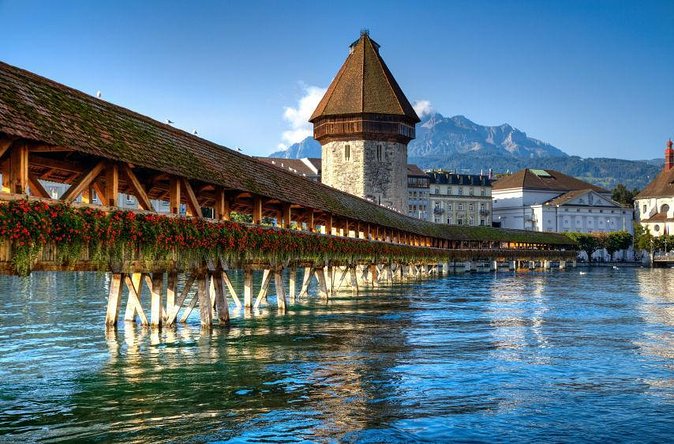
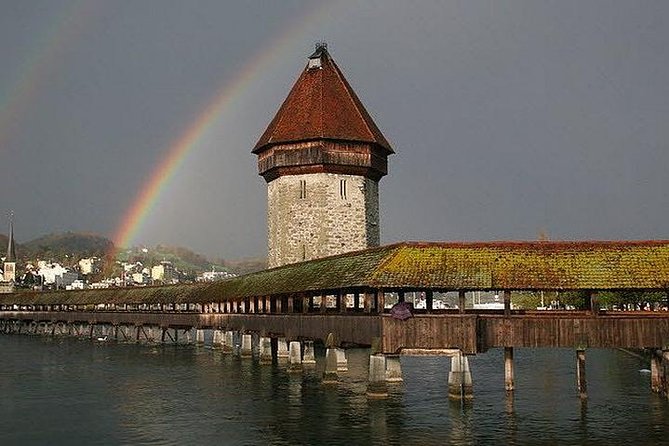
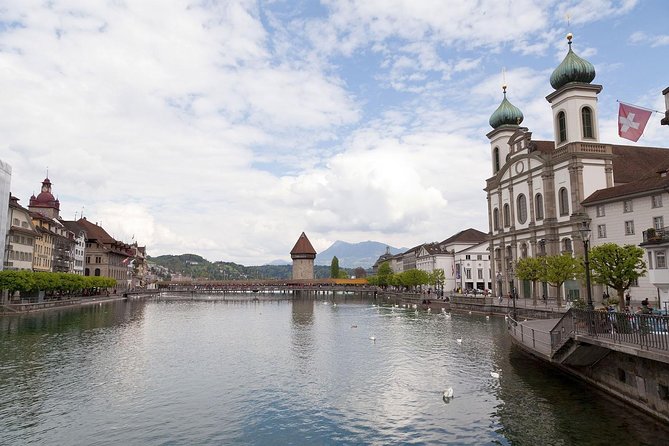
Next comes Chapel Bridge, Lucerne’s most famous sight. You cross the wooden bridge and hear about its role as part of the city’s former defenses. The Water Tower beside it once served as a prison.
The bridge’s painted interior panels deserve attention, not just a quick walk across. Your guide can explain what you are seeing and point out how the bridge and tower worked together as part of the old city. This is also a place where your timing matters, since the bridge can be a busy photo stop.
The route does not end at the bridge itself. That is useful because the final stop adds one more piece to the city’s story.
Peterskapelle and the last details of old Lucerne
The walk ends at Rosengart Platz beside St. Peter’s Chapel. The chapel is described as the first church in town and dates to the 12th century.
You also see the Zur Gilgen House, identified as Lucerne’s first private stone house, dating from the early 16th century. Finally, your guide explains why Chapel Bridge carries its name.
This ending works well because it ties together the city’s religious buildings, private homes, bridges, and older street plan. Your guide remains available for further questions and can take you back to your hotel by public transportation or on foot.
That return option is helpful if you are unsure where to go next. It also means the tour can function as a first orientation walk, not just a two-hour list of sights.
What the private format adds
The private setup is the main reason to consider this experience over a standard group walk. Only your group participates, so you can ask questions without holding up strangers. You can also request a quicker route if you have a mountain excursion, museum booking, or train to catch later.
The practical value shows up in small ways. Guides have adjusted the schedule for groups with limited time, kept eight-person groups moving at a good pace, and offered advice on restaurants, chocolate, shopping, museums, and other activities.
Families and mixed-age groups may find this format especially useful. The route is manageable for older family members and children, but the Musegg climb still requires care. Tell the guide at the start if your group needs a slower pace or more time at a particular sight.
The guide names that appear in the available feedback are Ralf and Ralph, likely different spellings of the same first name. Do not assume a particular guide is guaranteed unless Citytrip AG confirms it. The consistent strength described is clear explanations, good timing, and useful local recommendations.
Is $198 per person good value?
At $198 per person, this is not a cheap way to see Lucerne. The price makes the most sense for people who value a private guide, hotel pickup, and a tightly planned route.
You are paying for more than transport. The experience includes a professional local guide, private participation, pickup and drop-off within Lucerne’s city limits, taxes, handling charges, and three exclusive postcards featuring Old Lucerne. Public transportation may be free with the Lucerne Visitor Card, but that depends on your hotel and card status.
The price is harder to justify if you are happy to navigate on your own, read about the monuments beforehand, and visit only the free outdoor sights. Lucerne’s Old Town is walkable, and many stops do not require admission.
I see the strongest value for first-time visitors with limited time, families that want a flexible pace, and people who prefer context over a quick photo circuit. It is also useful early in a stay, since your guide can help shape the rest of your plans.
The tour is highly rated, with 100 percent recommendation from 16 ratings. That is a small sample, so I would not treat it as proof that every guide or departure will be identical. Still, the repeated praise focuses on the same useful traits: punctual pickup, clear explanations, strong local knowledge, good pacing, and practical food and museum advice.
Weather, clothing, and timing advice
The walk operates in all weather, so dress for conditions. Comfortable walking shoes matter most, especially for the uphill stretch to the Musegg Wall and the tower stairs.
If you want the full route, avoid November through March, when the Musegg Wall and Towers are closed to interior visitors. Avoid weekends, public holidays, and special event dates if the Ritter Palace interior is important to you.
You may want to schedule this early in your Lucerne stay. The route covers the city’s main sights, and the restaurant, chocolate, shopping, and museum suggestions can help you plan the following days. The guide can also adjust the timing if you have other plans.
Free cancellation is available until 24 hours before the start time. Changes or cancellations made inside that window are not accepted for a refund.
Who should book this Lucerne walk?
Book it if you want a private introduction to Lucerne with a real human guide, hotel pickup, and a clear route through the Old Town. It is particularly suited to first-time visitors, families, small groups, and anyone who wants to combine major sights with lesser-noticed details.
Think twice if your budget is tight or if you mainly want unstructured time for photos. The two-hour schedule moves steadily, and the winter or weekend closures can remove two of its most distinctive stops.
For the best version of the experience, book a weekday from April through October, bring your Visitor Card, wear good shoes, and tell the guide what matters most to you. If you want Lucerne explained rather than simply photographed, this private walk is a strong opening act.
FAQ
How long does the Private Classic Lucerne City Walk last?
The tour lasts approximately two hours. One group’s walk lasted a little more than two hours, depending on walking time, questions, and the pace of the group.
Where does the tour begin?
Your guide picks you up at any hotel within Lucerne’s city limits. You can also meet at the large arch directly outside Lucerne main station.
Does the tour include hotel pickup and drop-off?
Yes. Pickup and drop-off at a Lucerne hotel within the city limits are included. At the end, your guide can return with you by public transportation or on foot.
Is public transportation included?
A public transportation ticket may be needed, depending on your hotel. Lucerne hotel visitors are entitled to free public transportation during their stay with the Visitor Card provided by the hotel reception.
Is the tour private?
Yes. Only your group participates in the activity.
Can I visit Musegg Wall and its towers in winter?
From November through March, the Musegg Wall and Towers are closed for interior visits. You can see them from the outside during that season.
Is Ritter Palace open every day?
No. Ritter Palace is closed on Saturdays, Sundays, holidays, and during special events. On those dates, the palace can be viewed from outside only.
Can I enter the Jesuit Church?
You have the opportunity to enter the Jesuit Church, but interior access is restricted during Mass services.
What happens if I need to cancel?
You can receive a full refund if you cancel at least 24 hours before the experience start time. Cancellations or changes made less than 24 hours before the start time are not accepted for a refund.
Just added around Lucerne
- Luzern Elegance: Private City Walk and Panoramic Lake Cruise★ 5.0 · 3 reviews
- Cheese, Chocolate and Wine in the Bern Region from Luzern★ 5.0 · 3 reviews
- Lucerne Lakeside and Villas Private Walking Tour★ 5.0 · 3 reviews
- Best of the Uri Alps: A fjord-like lake, glorious peaks and sustainable tourism★ 5.0 · 3 reviews
- Lucerne: Legends of Lake Lucerne – Steamboat Experience★ 5.0 · 3 reviews
- Lucerne: Glacier Express’s Swiss Alps & Lucerne Private Tour★ 5.0 · 3 reviews
- From Lucerne: Canyoning Adventure in Interlaken★ 4.5 · 3 reviews
- Lucerne: Private Walking Tour and Chocolate Tasting★ 5.0 · 3 reviews
Lucerne Tours, compared.

From Zurich: Mount Titlis and Lucerne Day Tour
Read our review →
Lucerne: Mt. Pilatus Cable Car, Cogwheel Train & Lake Cruise
Read our review →
Mount Pilatus Summit from Lucerne With Lake Cruise
Read our review →
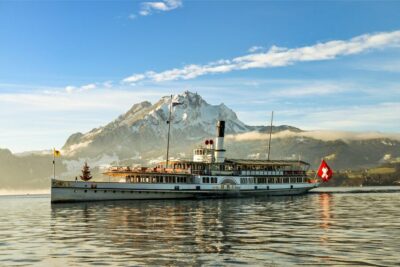
From Lucerne: Mt. Pilatus Gondola, Cable Car, and Boat Trip
Read our review →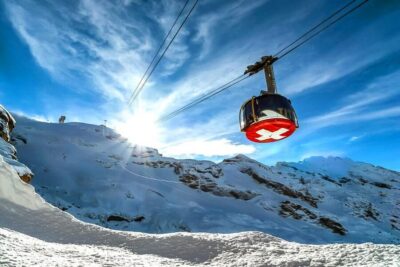
From Lucerne: Mount Titlis Half-Day Tour with Ice Flyer
Read our review →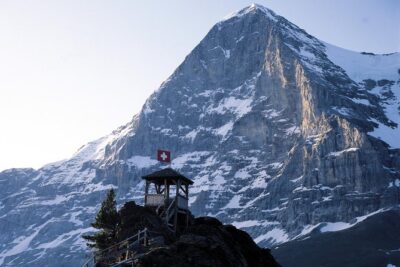
Jungfraujoch Top of Europe Day Trip from Lucerne
Read our review →Browse the lists this tour appears in