
Reviewed · LAKE GENEVA RIVIERA TOURS
Historic Lausanne: Exclusive Private Tour with a Local Expert
Lausanne’s best stories unfold on foot, and this private two-hour walk links its medieval core with elegant public spaces and cultural landmarks. You move from Bessières Bridge to the cathedral, then through old stairways, government buildings, shopping streets, and museums. The guide can shape the route around your interests rather than giving every group the same script.
I like the personal format, especially for a city with steep streets and many layers. I also like the chance to hear local details from guides such as Thomas, who has led visitors through Old Town Lausanne and even timed stops with organ music in two churches. The main drawback is the price: at $211.21 per person, this makes the most sense for a small private group, not a solo visitor seeking the cheapest introduction.
Key points to know before booking
- Begin at Bessières Bridge: The tour opens with a useful view over Lausanne and its connected neighborhoods.
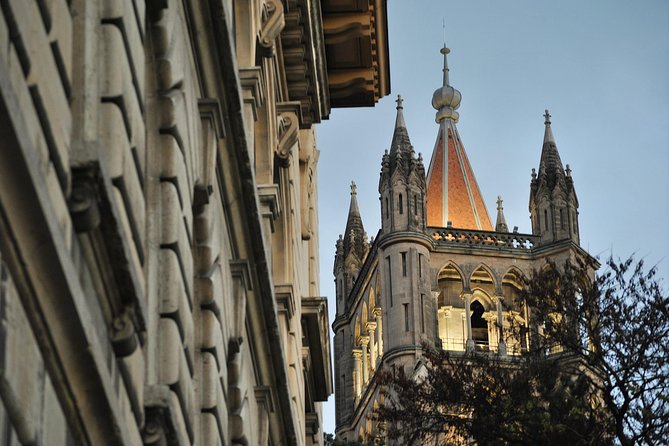
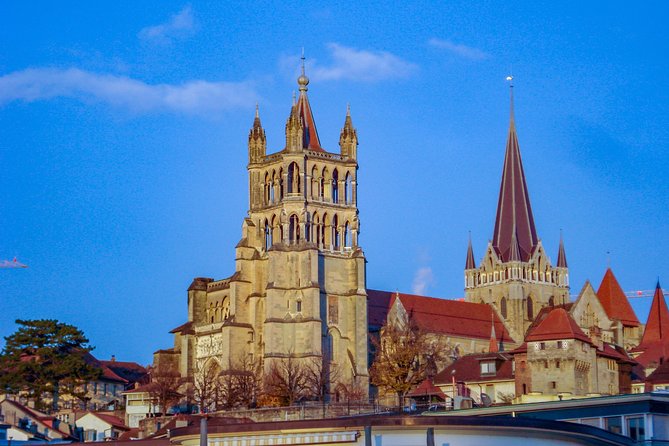
- See the cathedral and medieval center: The Gothic cathedral is the visual and historical heart of the walk.
- Expect a flexible route: Your guide can adapt stops to your interests, walking pace, and weather.
- Walk steep historic streets: The Escaliers du Marché and Lausanne’s changing elevations require comfortable shoes.
- Finish near the train station: The walk ends at Musée de l’Elysée, making it easy to continue exploring.
- Book for attention, not admission tickets: The price covers a private guide and tailored route, but not museum, monument, or transport entry.
Starting above Lausanne at Bessières Bridge
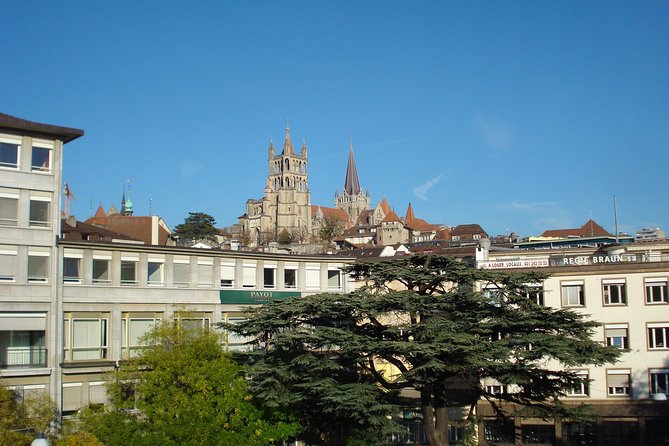
The meeting point is Pont Charles Bessières, also called Bessières Bridge, at the edge of central Lausanne. This is a smart place to begin because the bridge gives you an immediate sense of how the city is arranged across different levels.
The view helps explain Lausanne before you start walking. Neighborhoods connect across the slope, while the city’s built-up streets meet open views and distant scenery. You are not simply ticking off a bridge. You are getting your bearings and seeing why a short walk here can feel more demanding than the distance suggests.
Your guide meets only your group, so this is a good moment to mention what you care about. You might want more church architecture, local government, shopping streets, museums, or general orientation. The route is not locked to one pace, and stops can change with the weather.
That flexibility matters in Lausanne. A two-hour walk is enough to see a lot, but not enough to study every building or enter every museum. A private guide can spend more time on the places that catch your attention and move faster through those that do not.
A few more Lausanne day trips to weigh up
- Zürich Historic District Tour
★ 5.0 · 206 reviews - Lucerne: 1-Hour Historical Tour with Night Watchman
★ 5.0 · 122 reviews - Basel Historical Old Town Tour
★ 4.0 · 99 reviews
Lausanne Cathedral and the Gothic center
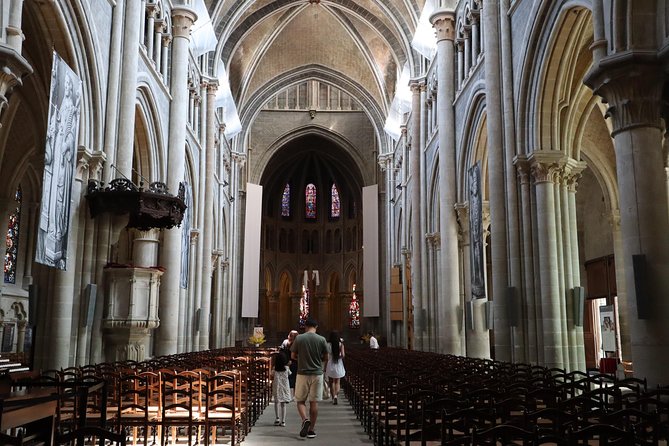
The cathedral is the centerpiece of the historic route. It is a major religious and historical landmark, and its Gothic design gives the old town its strongest sense of place.
The tour allows you to see the cathedral as part of the city around it, not as an isolated photo stop. Streets, steps, and civic buildings lead toward it, so the guide can explain how Lausanne’s older center fits together. If architecture interests you, this is likely where the two-hour walk earns much of its value.
One particularly good possibility is hearing the organ played. Thomas’s route included organ music at two churches, an experience that added sound to the architectural visit. That kind of moment cannot be promised, since music schedules and access can change, but you can tell your guide if church interiors and music matter to you.
A practical point: entry tickets are not included. The supplied details do not promise cathedral admission or a particular interior visit, so ask what is planned if entering the building is important to you. The cathedral is still worth seeing from the outside, but your expectations should match what the tour includes.
Château St-Maire and Lausanne’s medieval power
From the religious center, the walk reaches Château St-Maire on Rue de la Barre. The building once served as a residence for bishops and now functions as a government site.
That change tells a useful Lausanne story. Religious authority, civic power, and modern administration all occupy the same historic center. A local guide can give the building meaning beyond its stone walls, explaining why it matters to the city today and what its earlier role says about Lausanne’s past.
Because Château St-Maire is a government site, do not assume you will tour the interior. The attraction here is the setting, exterior architecture, and context. This is a good stop for you if you prefer understanding how a city developed rather than simply collecting landmark photographs.
The private format helps with questions. In a large group, a building like this can pass in a few minutes. With your own guide, you can ask about the bishops, the government role, or nearby streets without worrying about holding up strangers.
Palais de Rumine and Place de la Riponne
Palais de Rumine, on Place de la Riponne, shifts the tone from medieval authority to public culture and education. The ornate building houses several important museums and is one of Lausanne’s most notable civic structures.
You will see how the city uses a major public building to bring museums and learning into the center. The guide may connect the building to Lausanne’s wider cultural life, but the tour price does not include museum entry. If you want to visit the collections, plan that as a separate activity.
Place de la Riponne also gives the walk a more open urban setting after the tighter old-town streets. That contrast is useful. Lausanne is not only a medieval quarter and cathedral; it is also a living city with public squares, institutions, shops, and daily movement.
I would ask your guide how much time you will spend here if museums are your main interest. Two hours goes quickly, and the route includes many stops. A short exterior explanation may suit someone who wants orientation, while a museum fan may prefer to use the tour to learn where to return later.
Same mountains, a completely different day out:
- The Olympic Museum Entrance Ticket in Lausanne
★ 4.5 · 211 reviews - Vine Stories: Lavaux & Lutry wine walk
★ 5.0 · 67 reviews - Riviera Col du Pillon & Glacier 3000 from Lausanne
★ 5.0 · 32 reviews - (KTL352) – Gruyeres Day Trip with Chocolate Factory from Lausanne
★ 4.0 · 17 reviews
Escaliers du Marché and the practical side of old Lausanne
The Escaliers du Marché are among the most atmospheric parts of the route. This historic staircase links the city center with the cathedral and gives you a traditional path through the old town.
The steps are also a clear reminder that Lausanne is not flat. You should wear shoes with a firm grip and expect some uphill and downhill walking. The tour is not recommended for people with impaired mobility, even though most participants can take part and service animals are allowed.
The staircase can feel more personal than a broad avenue because it draws you through a narrow historic route. It also shows how people moved around Lausanne before modern streets and transport shaped the city. Your guide’s local observations are especially useful here, since the value comes from noticing small details in the passage.
If your pace is slow, say so at the start. The itinerary adapts to walking speed, but the route still covers several parts of central Lausanne in about two hours. A private group has a better chance of making sensible adjustments than a fixed public group.
Rue de Bourg, from medieval route to shopping street
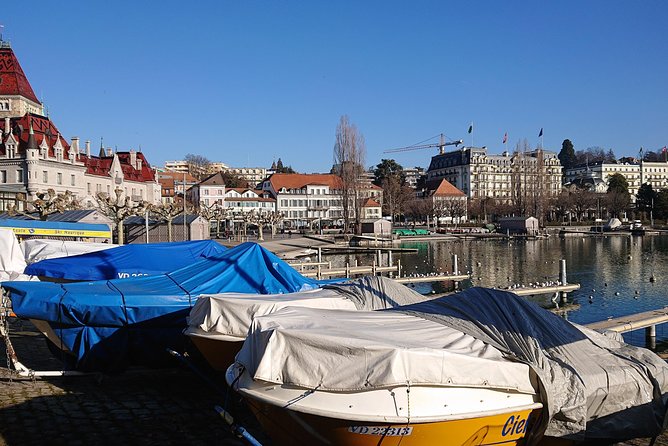
Rue de Bourg brings you into one of Lausanne’s main shopping streets. Historic buildings line a route that now serves everyday city life, retail, and movement through the center.
This is a helpful stop because it shows urban change in plain view. You are not looking only at preserved monuments. You are seeing old buildings used within a modern commercial street, which makes the city feel lived in rather than arranged for sightseeing.
The atmosphere here can differ from the quieter cathedral area. Shops and city activity may make conversation harder at certain moments, though the private format lets you stop when something catches your eye. If you want shopping advice, ask your guide for local pointers, but personal purchases are not included in the tour price.
Rue de Bourg also helps break up the architecture-heavy parts of the walk. You get a chance to notice facades, street layout, and how Lausanne’s center connects its historic core with ordinary daily business.
Esplanade de Montbenon and a pause above the city
At Allée Ernest-Ansermet, the Esplanade de Montbenon offers open space and views. After the cathedral’s enclosed streets, the esplanade gives you room to pause and see the city from a broader angle.
I like this kind of stop on a walking tour because it gives your legs a break while adding visual context. You can compare the dense old center with Lausanne’s more open public spaces and see how urban life meets the surrounding scenery.
The stop is also a useful place to ask your guide for recommendations after the tour. Since the route ends near Musée de l’Elysée and the train station, you can discuss what to do next, where to return, or which parts of the center deserve more time.
Weather matters here. Stops can vary depending on conditions, and an open esplanade is more exposed than a museum or sheltered street. The guide may shorten or alter this part of the route if the weather turns poor.
Musée de l’Elysée and the walk’s cultural finish
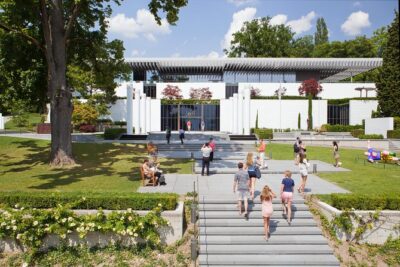
The tour ends at Musée de l’Elysée, at Place de la Gare 17. This renowned photography museum gives the walk a clear artistic finish and places you near the railway station.
The ending works well for a first look at Lausanne. You begin with a bridge and old-town views, pass religious and civic landmarks, then finish with photography and modern cultural life. It is a broad introduction rather than a single-theme tour.
Museum admission is not included, so consider the walk a way to identify places for later visits. If photography interests you, you may want to return with more time. If you are catching a train, the ending point is also convenient, though you should allow time for your own onward plans.
The final location is stated as Musée de l’Elysée, but exact access inside each stop is not guaranteed. Ask the guide at the beginning which buildings will be entered and which will be viewed from outside.
What the private format is worth at $211.21
The listed price is $211.21 per person, with group discounts available. The value depends heavily on group size. For two or three people who want a flexible introduction and plenty of questions, the cost can be reasonable. For one person, it is a significant outlay for a two-hour walk.
You are paying for an independent local guide, exclusive use of the tour, and a route tailored to your interests. You are not paying for transport, museum tickets, monument entry, food, or personal expenses. Keep that distinction clear when comparing this with longer group tours.
A private tour can save time in less obvious ways. You do not wait for a large party to gather, and you can adjust the pace when streets become steep or a building deserves more attention. If you have only a short stay in Lausanne, that control may be worth more than a lower per-person price.
The advance booking pattern is about 67 days, so popular dates may fill early. That figure is useful as a planning signal, not a guarantee. If your schedule is fixed, booking ahead is sensible.
Who will get the most from this walk
I would choose this experience if you want a first look at Lausanne with a local voice and do not want to manage a large group. It suits couples, families, and small groups who want to ask questions and change the emphasis as they go.
It is especially useful for you if:
- You want old-town orientation in a short window
- You care about architecture, churches, civic buildings, or photography
- You prefer walking to a bus-based city introduction
- You want local suggestions for the rest of your stay
- You are comfortable with steps and uneven urban routes
I would think twice if you have impaired mobility, dislike hills, or want extensive interior visits. The tour includes many landmarks, but entry costs are separate and two hours does not allow long museum sessions.
The guide quality also matters. The strongest experiences depend on the individual local host. Thomas has been specifically associated with a pleasant Old Town route and memorable organ music, but guide assignment is not guaranteed. One booking also suffered from a guide no-show, despite the group arriving early, so I would confirm the meeting details close to the start time and contact the provider promptly if anything looks unclear.
Cancellation is free up to 24 hours before the local start time. Cancellations or changes inside that window are not refunded or accepted.
Should you book Historic Lausanne?
Book it if you want a compact, private introduction that connects Lausanne’s cathedral, medieval streets, civic buildings, public views, and art scene. The tailored pace and local perspective are the main benefits, and the route gives you plenty of ideas for independent exploring afterward.
Skip it if your priority is the lowest price, long museum visits, or a fully accessible route. At $211.21 per person, this is a premium short walk. It becomes easier to justify with a small group, a tight schedule, and a genuine interest in asking questions rather than simply following a sightseeing checklist.
FAQ
How long does the Historic Lausanne private tour last?
The tour lasts approximately two hours.
Where does the tour begin?
It begins at Bessières Bridge, Pont Charles Bessières, 1003 Lausanne, Switzerland.
Where does the tour end?
The tour ends at Musée de l’Elysée, Place de la Gare 17, 1003 Lausanne, Switzerland.
Is this a private tour?
Yes. Only your group participates, and the itinerary can adapt to your interests and walking pace.
Are museum and monument entry tickets included?
No. Entry tickets for transportation, museums, and monuments are excluded.
Is the tour suitable for people with impaired mobility?
The tour is not recommended for people with impaired mobility. Most participants can take part, and service animals are allowed.
What is the cancellation policy?
You can cancel up to 24 hours before the experience start time for a full refund. Cancellations or changes made less than 24 hours before the start are not accepted or refunded.
Just added around Lausanne
- Explore Lausanne in 60 minutes with a Local★ 4.0 · 3 reviews
- (KTL303) – Winter Tour Montreux and Chaplin’s World from Lausanne★ 5.0 · 7 reviews
- Lausanne Foxtrail Citi★ 4.5 · 7 reviews
- Explore Lausanne in 60 minutes with a Local★ 3.0 · 8 reviews
- Panoramic Wine Tour From Lausanne★ 5.0 · 8 reviews
- (KTL361) – Interlaken day trip by bus from Lausanne★ 4.5 · 9 reviews
- Discover Lausanne’s most Photogenic Spots with a Local★ 5.0 · 9 reviews
- (KTL364) – Small group tour Jungfrau and Interlaken from Lausanne★ 4.5 · 9 reviews
Lake Geneva Riviera Tours, compared.
Glacier 3000 Ticket Including Cable Car and Peak Walk by Tissot
Read our review →
Maison Cailler Visit and Walk A Pioneer in the Meadows
Read our review →
Browse the lists this tour appears in