
Reviewed · LUCERNE TOURS
Lucerne: Classic City Walking Tour
Lucerne’s best stories unfold on foot, from a dying lion carved into rock to medieval towers, painted bridges, and a Renaissance palace courtyard. This private tour packs those sights into two hours, with a guide to explain the symbols and politics that can be easy to miss on your own.
I like the small private format, which lets you ask questions and keep the pace personal. I also like the route’s variety: the Musegg Wall adds medieval fortifications, while the Dance of Death paintings offer a darker, more unusual look at Lucerne. The main consideration is price: at $323 per person, this is a serious splurge for a two-hour walk, especially if your group is small.
Key Points at a Glance
- Lion Monument: See Lucerne’s moving memorial to Swiss mercenaries killed during the French Revolution.
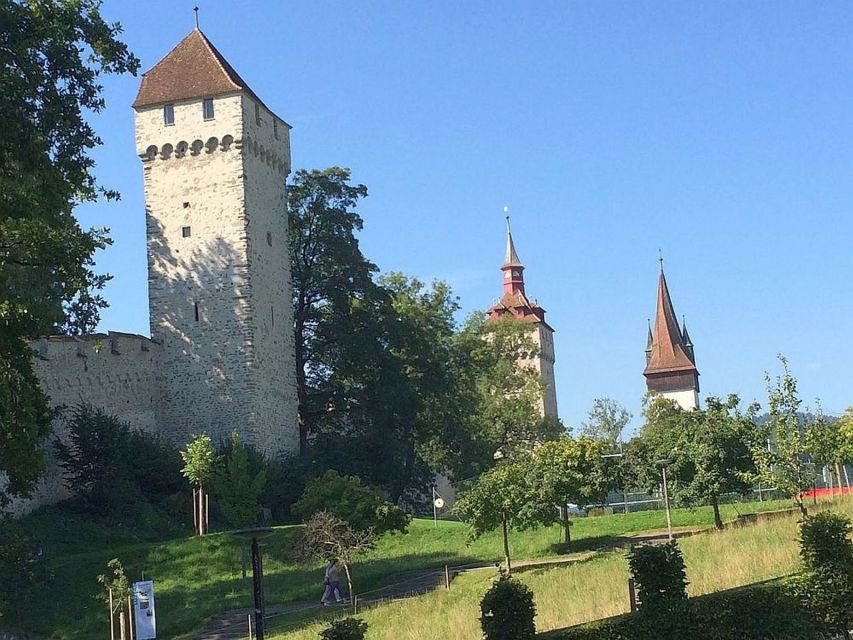
- Musegg Wall towers: Enter Schirmerturm and Zeitturm when they are open, and see a late-medieval clockwork mechanism.
- Old Town details: Follow fountains, painted facades, alleyways, bridges, and Furrengasse through the historic center.
- Chapel Bridge and Jesuit Church: Cross Lucerne’s famous covered bridge, then visit Switzerland’s first Baroque church.
- Renaissance art: Enter Ritter’s Palace and view seven Dance of Death paintings by Jakob von Wyl when the palace is open.
- Private hotel pickup: Your guide meets you at any Lucerne hotel and begins with a route briefing on a city map.
Why This Lucerne Walk Is More Than a Checklist
The appeal here is not simply seeing Lucerne’s famous sights. It is the connection between them.
You start with the city’s modern visitor image, then move backward through its story. The Bourbaki Museum introduces an important chapter in Swiss history. The Lion Monument brings the French Revolution into view. The Musegg Wall shows how medieval Lucerne defended itself. The old town then fills in the daily details: fountains, churches, painted buildings, and narrow lanes.
That sequence gives you a useful frame for the rest of your time in Lucerne. After the tour, you will recognize more than a few postcard views. You will know why the monuments are there and what details deserve a second look.
The guide speaks English or German, and the private format is useful for couples, families, or friends who want to ask questions without holding up a larger group. The tour is listed at a 4.9 rating from 15 bookings, with several highly positive comments about the city walk and the historical insight. One participant described guide Ralf’s tour as engaging and full of fresh ways to understand old details.
That said, the experience depends in part on the individual guide. One booking from 2022 described a rough start, with the guide waiting in a lobby corner rather than actively finding the group, then walking well ahead on the way out of the hotel. Once the tour began, the experience improved. I would confirm the meeting point and make sure everyone knows where to gather before departure.
More Walking Tours in Lucerne
- Lucerne: Private Walking Tour with a Local Guide
★ 4.6 · 450 reviews - Lucerne Walking & Boat Tour: The Best Swiss Experience
★ 4.5 · 417 reviews - Lucerne: Guided Walking Tour with an Official Guide
★ 4.7 · 321 reviews
Starting at Your Lucerne Hotel
Your guide meets you at the reception of your hotel in Lucerne. This is a practical start, particularly if you have just arrived and do not yet know your way around the old town.
Before setting out, the guide reviews the route on a city map and explains what you will see. That short briefing matters because the tour covers several different sections of central Lucerne in only two hours. You can also use this moment to clarify the meeting place and ask about the walking pace.
Hotel pickup is included from all Lucerne hotels. If your hotel is outside the old town, you may need a bus ticket to reach the historic center and return afterward. Lucerne hotel visitors receive a free public transport ticket for their entire stay at reception, so check there before buying anything.
The tour runs in all weather. Bring clothing suited to the forecast, since this is an outdoor walk with exposed sections along the old fortifications and streets. Comfortable shoes are sensible because the route includes a hill, towers, bridges, and uneven old-town surfaces.
Bourbaki Museum and the Lion Monument
The first major stop is the Bourbaki Museum, where the guide gives you historical background before continuing to the Lion Monument. The museum itself is an important Lucerne landmark, but the tour information centers on its place in the wider story of Switzerland and Europe.
The Lion Monument is the emotional centerpiece of the first part of the walk. It shows a dying lion carved into a rock face and honors the Swiss mercenaries who died defending the Royal Palace during the turmoil of the French Revolution.
The image is powerful because it avoids a grand victory pose. The lion is wounded and dying, which gives the memorial a solemn tone. Your guide can help explain why Swiss soldiers were serving abroad and how the events in France affected Switzerland.
You should allow yourself a quiet moment here rather than treating the stop as a quick photograph. The monument is one of Lucerne’s most recognized sights, but its meaning is stronger when you understand the people and political upheaval behind it.
Schirmerturm, Zeitturm, and Lucerne’s Defensive Wall
After the Lion Monument, the walk takes about 10 minutes to reach the Musegg Wall. This preserved section of Lucerne’s medieval outer fortification gives the tour a very different feel from the polished squares and shop-lined streets below.
When the towers are open, you visit Schirmerturm and Zeitturm. Zeitturm contains a clockwork mechanism dating from the late Middle Ages, a detail that gives the stop more substance than a simple tower climb.
The guide also uses the wall to discuss Swiss history, wars of liberation, territorial expansion, and the armed neutrality that still shapes the country’s public identity. These subjects can sound broad in a short city tour, but the fortifications give them a physical setting. You are standing where the city once watched, guarded, and controlled access.
The climb is one of the tour’s best features, but it comes with a seasonal catch. From November through April, the Musegg Wall towers are closed inside, so you cannot enter them during the winter months. The walk can still include the wall area, but the tower interiors and clockwork are not available.
Same mountains, a completely different day out:
- From Zurich: Mount Titlis and Lucerne Day Tour
★ 4.7 · 3,381 reviews - Lucerne: Mt. Pilatus Cable Car, Cogwheel Train & Lake Cruise
★ 4.7 · 2,338 reviews - Lucerne: 1-Hour Cruise on Panoramic Yacht
★ 4.6 · 1,514 reviews - Mount Pilatus Summit from Lucerne With Lake Cruise
★ 4.5 · 1,260 reviews
Wine Market, Pilatus Water, and Furrengasse
Back in the central old town, the route reaches the Wine Market, home to Lucerne’s oldest fountain. Here, you can drink pure Pilatus spring water and hear why the guide says this well provides the city’s best water.
That small stop is exactly the sort of local detail that makes a walking tour worthwhile. You are not just passing another fountain. You are learning how a familiar piece of street furniture connects to Lucerne’s water supply and local pride.
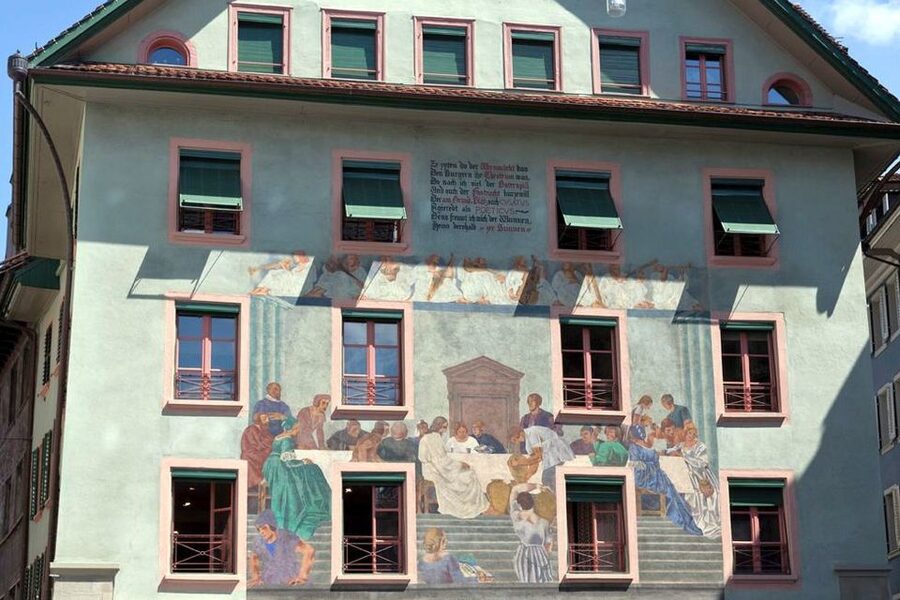
From there, the route follows Furrengasse, a legendary old-town lane, toward Peterskapelle. The lane helps you see Lucerne at street level, where the character comes from narrow passages, painted walls, old facades, and small changes in the shape of the city.
Peterskapelle is the first church in Lucerne. It dates to the city’s founding in the 12th century, giving the tour a direct link to the earliest period of Lucerne’s urban development.
I like this stretch because it slows the route down. The Lion Monument and Musegg Wall are obvious destinations, but the fountain, lane, and old church explain how the city feels between those headline sights.
Crossing Chapel Bridge
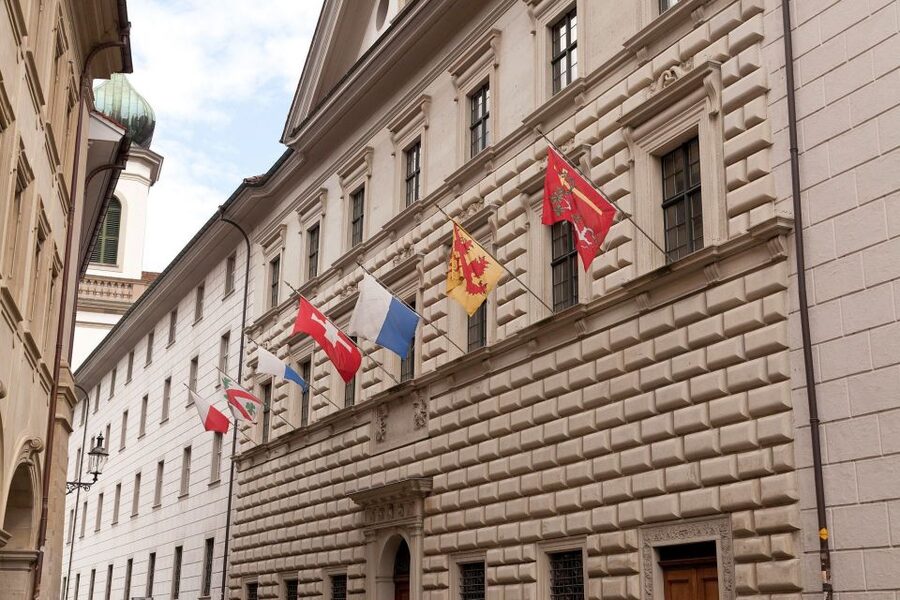
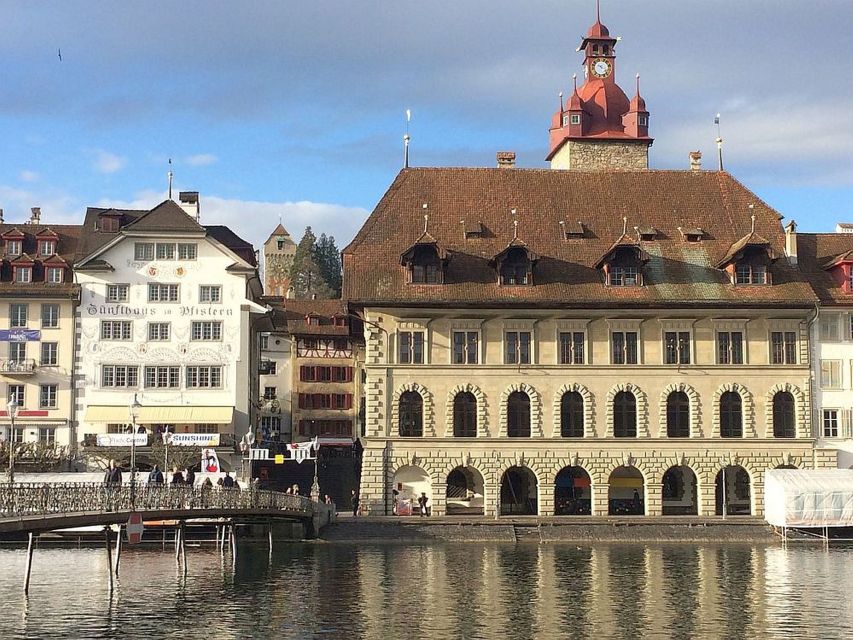
The walk then crosses the world-famous Chapel Bridge to the opposite side of the historic center. The bridge is one of Lucerne’s defining views, with the river, old buildings, and waterfront setting coming together in one short crossing.
The bridge is famous for its covered wooden structure and historic roof paintings. The tour information provided here focuses on the crossing itself, so do not expect a separate, extended lecture on every painting. Still, your guide can help place the bridge within Lucerne’s old-town layout and show how it links both sides of the center.
This is a busy public attraction, and the experience depends on conditions at the time of your visit. The private group format gives you more control over where you stop, but the bridge remains a working city crossing, not a quiet museum room.
Jesuit Church and Switzerland’s First Baroque Church
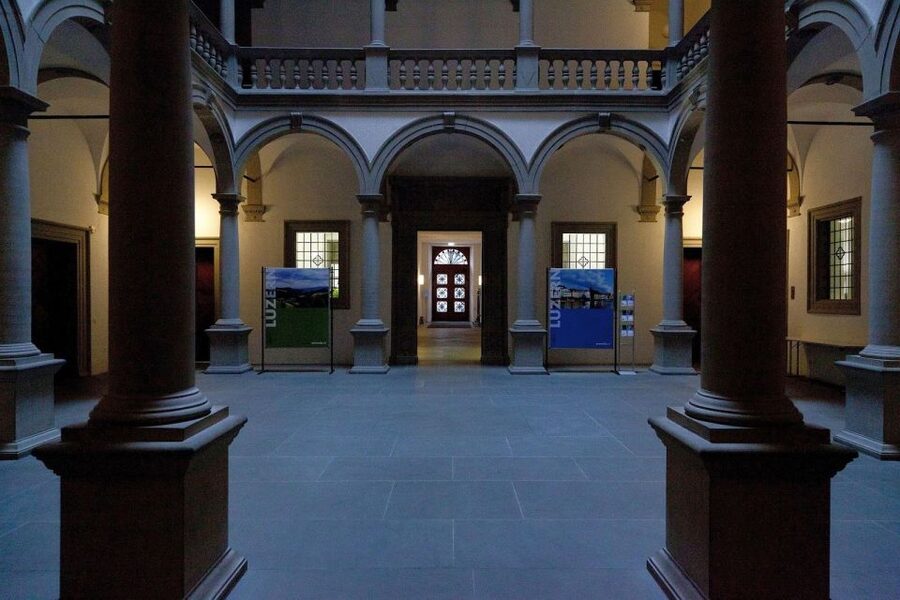
On the other riverbank, you visit the Jesuit Church from the inside, except during services. It is identified as the first Baroque church in Switzerland, making it an important stop for anyone interested in architecture, religious art, or the period when Lucerne was reshaping its public image.
The church offers a clear contrast with Peterskapelle. The earlier chapel connects you to Lucerne’s medieval beginnings, while the Jesuit Church reflects a later, more decorative style. That contrast helps you read the city as a series of layers rather than one uniform old quarter.
Since entry is not available during church services, the interior visit is not guaranteed at every moment. If seeing the inside is especially important to you, it is worth checking the timing when you book or meet your guide.
Ritter’s Palace and Hans von Trient’s Stonework
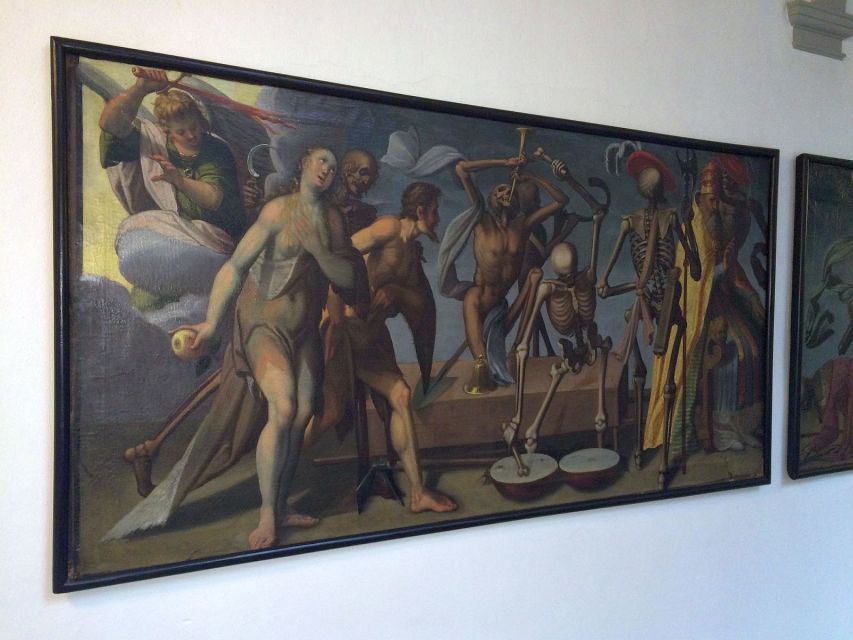
A few steps farther, you reach the cantonal government building, formerly Ritter’s Palace. It is described as Lucerne’s most imposing Renaissance palazzo, and the courtyard is the reason this stop is worth adding to a standard city walk.
Inside the courtyard, you can see loggias and admire stone carvings linked to the unfortunate stonemason Hans von Trient. These details reward a slower look. From the street, the building may seem formal and closed, but the courtyard reveals the craftsmanship and ambition behind it.
This is also one of the tour’s most important limitations. Ritter’s Palace is closed inside on Saturdays, Sundays, public holidays, and during special events. You may still see the exterior, but the courtyard and interior visit will not be part of the experience on those dates.
If the palace matters to you, schedule the walk on a weekday that is not a holiday. The itinerary is strongest when both the Musegg towers and Ritter’s Palace are open, so season and calendar date can make a real difference.
The Dance of Death Paintings
The final featured stop is a presentation of seven Dance of Death paintings, created around 1610 by Jakob von Wyl. This Renaissance artwork, also called Danse Macabre, presents death as a force that reaches across social rank and daily life.
The subject gives the tour a memorable ending. After fortifications, churches, and civic buildings, you finish with art that is direct, unsettling, and tied to the anxieties of its age. The paintings are not simply decorative works to pass on the way to the next stop. They ask you to think about mortality, status, and the limits of worldly power.
The presentation is especially useful because the meaning of older religious and allegorical art is not always obvious at first glance. A guide can point out what to look for and explain why the work mattered in Renaissance Lucerne.
For many people, this will be the tour’s most distinctive stop. Chapel Bridge and the Lion Monument are easy to find on your own. The Dance of Death presentation is less obvious and gives the walk a stronger sense of discovery.
Is $323 Per Person a Fair Price?
At $323 per person, this is expensive for two hours of sightseeing. The price is easier to justify if you are traveling as a private group that values a personal guide, hotel pickup, and a focused introduction to Lucerne. It is harder to justify for a solo visitor or couple who mainly want to photograph the major landmarks.
You are paying for context and convenience, not admission to a long list of attractions. The tour includes a local guide, but the supplied details do not list separate entrance fees. The core value comes from having one person connect the Lion Monument, Musegg Wall, old town, Chapel Bridge, Jesuit Church, Ritter’s Palace, and Dance of Death paintings into one coherent walk.
I would compare the cost with your own priorities. If you have only a short stay in Lucerne and want the city’s main sights explained in one appointment, the private format may save time and reduce guesswork. If you have several days and enjoy reading signs, visiting museums, and walking independently, the cost may feel steep.
The reserve-now-and-pay-later option gives you some planning flexibility, and cancellation is free up to 24 hours before the tour for a full refund. Those terms are useful, but they do not change the basic value question: this is a premium private introduction, not a low-cost orientation walk.
Who Should Book This Walk?
I would recommend it most strongly to first-time visitors who want a clear introduction to central Lucerne without managing the route themselves. It also suits families or small groups who want to move at their own pace and ask questions along the way.
History and architecture fans will get the most from the combination of medieval defenses, Renaissance civic design, Baroque church architecture, and symbolic art. The tour is also a good match for visitors who prefer local details, such as the Pilatus spring water and Hans von Trient’s carvings, over a simple list of famous viewpoints.
You should think twice if you are visiting between November and April and consider the Musegg towers essential. The interiors are closed then. Weekend and holiday visitors should also note that Ritter’s Palace cannot be visited inside on those dates.
The tour is conducted in all weather, so it is not ideal if you want a fully indoor experience. It also has a brisk route for two hours, with a walk uphill to the Musegg Wall and tower access when available.
Should You Book the Classic City Walking Tour?
Book it if you want a private, tightly planned introduction to Lucerne and value explanations as much as photographs. The route covers the city’s strongest sights, then adds details you could easily miss, especially the old fountain, Peterskapelle, Ritter’s Palace, and the Dance of Death paintings.
I would book on a weekday between May and October if possible. That gives you the best chance of seeing both the Musegg towers and Ritter’s Palace interiors, though opening conditions can still vary.
Skip it if $323 per person feels out of proportion to a two-hour walk, or if you are comfortable exploring Chapel Bridge, the Lion Monument, and the old town on your own. For the right budget and schedule, this is a thoughtful city primer with real historical range. For a low-cost sightseeing day, it is not the best fit.
FAQ
How long is the Lucerne Classic City Walking Tour?
The walking tour lasts two hours.
Where does the tour begin?
Your English- or German-speaking guide meets you at the reception of your hotel in Lucerne.
Is hotel pickup included?
Yes. Pickup is included from all hotels in Lucerne.
What languages are available?
The tour is offered in English and German.
Is this a private tour?
Yes. The activity is conducted as a private group tour.
Can I visit the Musegg Wall towers all year?
No. The Musegg Wall towers are closed for interior visits between November and April.
Can I visit Ritter’s Palace inside on weekends?
No. Ritter’s Palace is closed inside on Saturdays, Sundays, holidays, and during special events.
Just added around Lucerne
- Luzern Elegance: Private City Walk and Panoramic Lake Cruise★ 5.0 · 3 reviews
- Cheese, Chocolate and Wine in the Bern Region from Luzern★ 5.0 · 3 reviews
- Lucerne Lakeside and Villas Private Walking Tour★ 5.0 · 3 reviews
- Best of the Uri Alps: A fjord-like lake, glorious peaks and sustainable tourism★ 5.0 · 3 reviews
- Lucerne: Legends of Lake Lucerne – Steamboat Experience★ 5.0 · 3 reviews
- Lucerne: Glacier Express’s Swiss Alps & Lucerne Private Tour★ 5.0 · 3 reviews
- From Lucerne: Canyoning Adventure in Interlaken★ 4.5 · 3 reviews
- Lucerne: Private Walking Tour and Chocolate Tasting★ 5.0 · 3 reviews
Lucerne Tours, compared.

From Zurich: Mount Titlis and Lucerne Day Tour
Read our review →
Lucerne: Mt. Pilatus Cable Car, Cogwheel Train & Lake Cruise
Read our review →
Mount Pilatus Summit from Lucerne With Lake Cruise
Read our review →
From Lucerne: Mt. Pilatus Gondola, Cable Car, and Boat Trip
Read our review →
From Lucerne: Mount Titlis Half-Day Tour with Ice Flyer
Read our review →
Jungfraujoch Top of Europe Day Trip from Lucerne
Read our review →Browse the lists this tour appears in